

In places like Portland, where “fancy jeans” is hardly an oxymoron and a fleece can pass for formalwear, the suit can feel almost theatrical — a costume imported from another city, another world. Yet even here, it retains its charge: A blazer adds sharpness, a matching suit suggests intention. As Robin Givhan, Pulitzer Prize-winning fashion critic, states, “A suit, after all, remains the uniform of power in Western countries. Everyone understands it.” That understanding is precisely what has made the suit so fraught — and so powerful — for women.
The adage “dress for success” suggests that clothing can change outcomes. It offers a sense of control: by adjusting the exterior, one may influence others’ perceptions and, in turn, change what becomes possible. While clothing cannot create competence, it does have the power to frame it. Throughout history, women have used fashion — subtly and decisively — to channel legitimacy, elegance, and power.
“There are several examples in history in which clothing and self-comportment choices have been politicized,” says Dr. Betty Luther-Hillman, history professor at Phillips Exeter Academy. This is apparent in protest movements, on red carpets, and in professional spaces. Even politicians choose their attire intentionally; in the recent election year, presidential candidate Kamala Harris used her suits to demonstrate her campaign message, especially through symbolic color and specific accessories to convey her values.
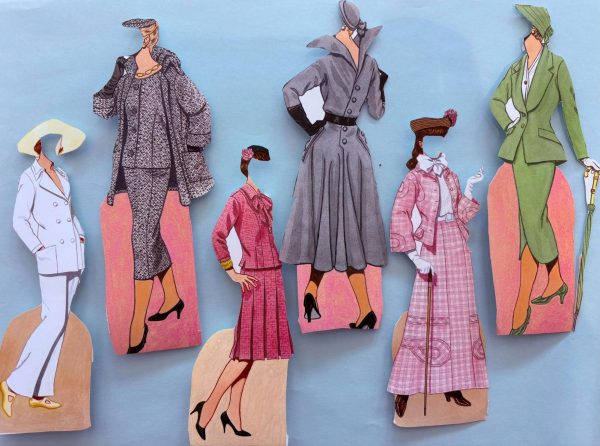
The women who first wore suits challenged societal norms. In adopting these garments, they borrowed and contested a visual vocabulary of authority traditionally associated with men. Silver screen stars like Marlene Dietrich and Katharine Hepburn helped propel that shift into public view. Dietrich’s wearing of suits and tuxedos had a charge of defiance, disregarding established perceptions and expectations of formalwear. Hepburn’s highly publicized preference for trousers, both on and off screen, helped establish pants as a viable option in women’s wardrobes.
The Chanel suit played an iconic role in this sartorial shift. Designer Coco Chanel’s two-piece set was introduced in the 1920s, inspired by menswear, sportswear, and the suits of her lovers. Seeking to create something more comfortable than the restrictively tailored garments of past decades, Chanel constructed a fluid, slim tweed skirt and jacket. Her suits turned an unglamorous material into an elegant one, and borrowed from a masculine cut to create something iconic in its femininity. Her design let the modern woman move freely, pockets for cigarettes included. Smart and stylish, the Chanel suit is still imitated a century later.
Suits like these were designed for the woman herself, indicating more about the wearer than her work environment. Often, women selected a skirted suit and blouse as the uniform of choice, echoing menswear without replicating it — authoritative, but acceptable.
After World War II, the female suit dwindled in popularity for a decade. Women who had entered the workforce during the war were encouraged to return to domestic life, and fashion followed suit. Dior’s “New Look,” with its nipped waists and full skirts, lauded a more traditional femininity.
However, by the latter half of the 20th century, those boundaries began to shift again. The Chanel suit evolved — more structure, more detail — alongside broader cultural change. In 1966, Yves Saint Laurent released his “Le Smoking” women’s tuxedo, cut to accentuate femininity. At a time when it was unheard of for women to wear trousers as eveningwear, the design was controversial; some establishments refused entry to women wearing them. Saint Laurent believed that donning a traditionally masculine costume would only enhance the wearer’s femininity, and his designs aimed to offer both elegance and practicality.
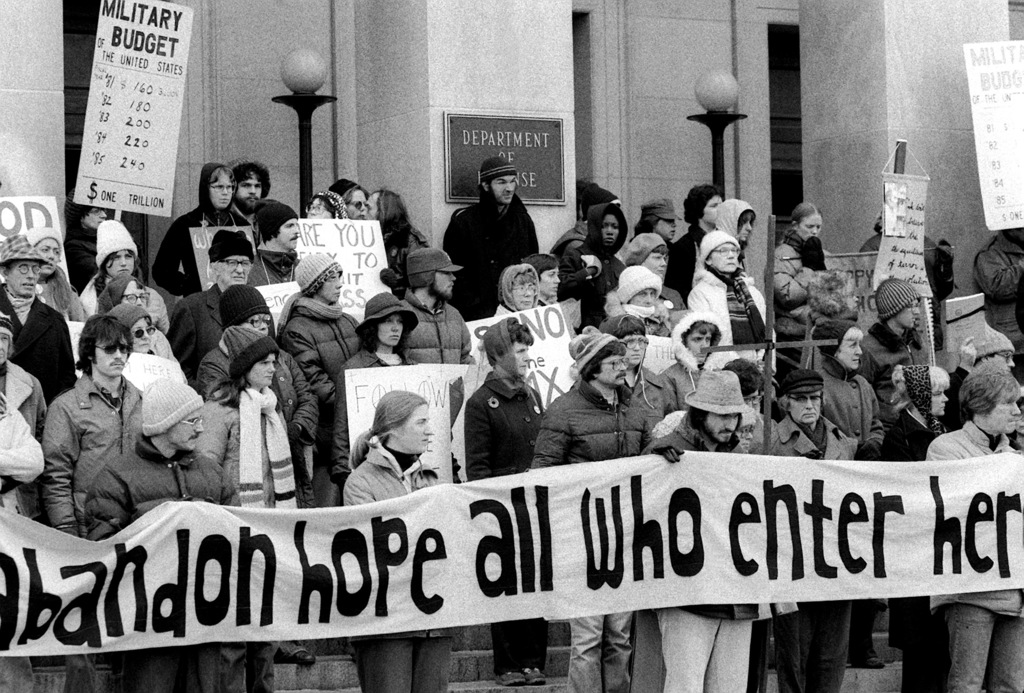
From 1930 to 1970, job opportunities and access to education expanded, and birth control gave women increasing agency over their lives and careers. By 1970, 50% of single women and 40% of married women were participating in the labor force, according to a Brookings Institution article. “Pantsuits and jeans for women became accepted in a variety of places where they had previously been forbidden, such as schools, certain restaurants, and business establishments,” Luther-Hillman explains. As more women entered professional spaces, dressing for work became an exercise in social politics and diplomacy.
To take on a new era, women needed a style as bold as they were, and the suit evolved again — padded shoulders, double-breasted jackets, bright colors. The ‘80s produced the decade’s iconic power suit, functioning as visually striking armor. “Clothing can serve as an exclamation point; it can add emphasis to a person’s qualifications,” says Givhan. In environments that questioned a woman’s authority, the power suit provided a visible argument for it.
“Women have always had a much wider range of ways to communicate using fashion,” Givhan notes. She continues, “The contemporary suit for them is a long way from the ones dating back to the 1970s and 1980s when women were new to positions of authority in the workplace and were often trying to blend in with their male counterparts.”
As definitions of professionalism have expanded, the suit no longer carries the same burden of proof. It is no longer a prerequisite for credibility, nor a uniform that must be adopted to be taken seriously. Now, it stands as one option among many, less a requirement than a resource. “Today’s suits aren’t aiming to camouflage femininity,” says Givhan. “They express power through a feminine vernacular. I think that’s a huge sign of progress.”
Who could afford a suit, who was permitted to wear one, and what it signaled all depended on the cultural moment. From its wartime utility to postwar domesticity, second-wave feminism to corporate changes, women’s clothing has consistently mirrored the limits imposed on them and the futures they imagined. As the expectations shift, the suit emerges as a potent symbol for women today, offering a way to project authority, self-assurance, and creative expression in a world that often still requires them to validate their presence.