


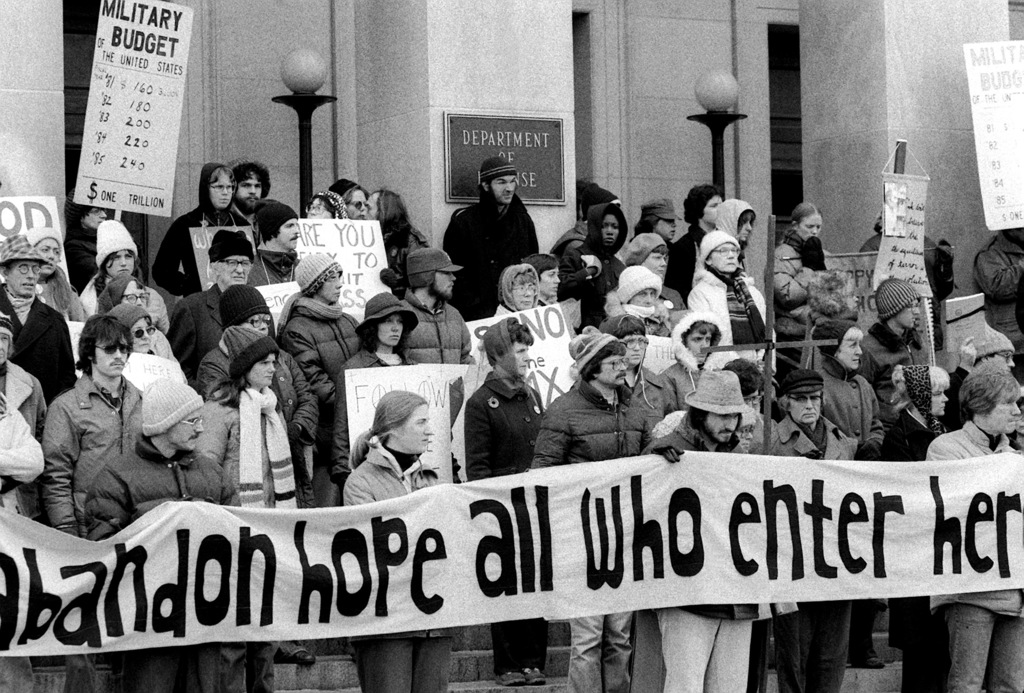


Throughout global history, people have been met with prejudice, injustice, and inequality and have pushed back against those conditions. Americans protested in the streets for the end of the Vietnam War and Civil Rights, and many fought against apartheid, nuclear proliferation, and the Iraq war. More recently, Americans have fought for the end of police brutality and have stood with the Black Lives Matter (BLM) movement.
With the Iran War, violent Immigration and Customs Enforcement (ICE) raids, and a crumbling economy, we have reached another tipping point in American history. This is why it is time for our generation to stop being stagnant and begin proactively organizing to build a country that we can feel proud of.
According to an article published by NPR that cites research by Erica Chenoweth and Maria J. Stephan, protests that involve 3.5% or more of the population have never failed as a movement. The protests of the anti-Vietnam War movement in the early 1960s led to the end of mandatory military service. The BLM protests in 2020 led to major police reform. Nevertheless, both of these movements took patience, dedication, and consistency.
Throughout history, public protests and movements in which people have taken to the streets and been seen by the general public have been instrumental in creating shifts in the dynamics of the country. While our peers and classmates obviously do care to some extent about the issues in this country, there is a level of hesitation and timidness when it comes to actual mobilization. It can seem intimidating to try to challenge a system that is already well established and protected, but it is simply no longer acceptable to stand by and do nothing.
A common narrative I have noticed relayed by my peers is that protests and small contributions are purely demonstrative and don’t actually create real change. However, judging a protest’s effectiveness solely by whether the problem becomes resolved immediately after misinterprets the purpose of creating a movement. Regardless of whether the protest achieved its goal or not, it can still be an incredibly important message to the whole country. It demonstrates that we, as young people, are united and truly care and will fight for our community. The importance and power of the sentiment that comes from unity cannot and should not be underestimated.
One of the major issues I’ve observed in terms of why people of our generation have struggled to mobilize is the lack of knowledge surrounding how to organize and the fear that if they do, no one will support them. Even I have been susceptible to the deep anxiety that maybe no one else will care about the issue that will so deeply affect our entire country. However, it’s important to remind yourself that your community most likely will care and will show up if given the chance.
When I attended a protest and march organized by McDaniel students on Jan. 30, I was reminded that my peers and friends do care. Viola DeVigal, a sophomore at McDaniel High School, was the primary organizer for this protest. DeVigal decided to organize the protest after seeing the students at her school being deeply impacted by the recent ICE raids and the fear they were inflicting.
DeVigal explained, “I’ve been definitely very passionate about the ICE impact on our community, especially considering McDaniel is really diverse, and we also have a very large Hispanic community, so I can see the impact of ICE, and [how] the fear surrounding ICE has impacted the school specifically.” Devigal had organized a smaller-scale walkout specifically for McDaniel students earlier in the school year. According to DeVigal, “That was kind of what started it off, and that had pretty good attendance … but I [felt] like the issue is still happening, and also there’s just so much more that we can do.” She reached out to other schools in PPS, hoping that some other students who felt enraged by the government’s immigration enforcement abuses would join forces with her and the students of McDaniel, and they did.
On Jan. 30, which was also the national Day Without Immigrants, hundreds of high schoolers from across Portland joined DeVigal in rallying for civil liberties and the protection of immigrant families. I was one of those students. Being surrounded by hundreds of fellow students, all of us advocating together for one shared goal, was like a balm for the constant sowing of division and fear from the people in power. However, this was a somewhat one-off event. There has yet to be another school-led walkout or protest in Southeast Portland since then. This shows that there is still a hesitancy and lack of mobilization within our school communities and our generation as a whole.
I am not writing this with the goal of berating us or saying that all people from our generation are lazy or don’t care about their community. I truly believe the opposite of that. Going to Franklin, which is a school rich with diversity, I have witnessed a beautiful melding of cultures, experiences, and friendships. I am confident that we are a compassionate group of individuals who do care about one another.
Samya Pillutla, a freshman at Franklin, said she feels like her peers do care for their friends and community who are being affected by the ICE conflicts. She commented, “I feel like they care a lot because they try their best to support and go against what’s wrong. Yeah, they’re doing a great job.” Some members of her friend group had attended the McDaniel protest, and others expressed concern about the looming threats of harassment of their peers. She went on to say, “Personally, I feel like sometimes [protesting] doesn’t do a lot, but also it is a great thing, because the community is coming together.” She highlighted the common disconnect that many students feel. There is empathy and concern for each other, but the idea of organizing can feel ineffective and confusing.
Pillutla brings up the crucial point about protests and collective action. Just look at the changes that the civilian protests in Minneapolis brought to the strategies of the Department of Homeland Security (DHS) in Minnesota. ICE and DHS have been exacting one of the most brutal raids on Minneapolis’ many immigrant communities. After the two murders of U.S. citizens Alex Pretti and Renee Nicole Good, protests throughout the city proliferated. After months of dedication from the communities of Minnesota, the United States government retracted some of its federal troops from the city. Granted, their presence is still there, and the community is still left reeling, but the progress that came is undeniable. This is clear evidence that we must be willing to actually do the hard work of walkouts and in-person public protests. We must be willing to receive training on ICE watches and provide support for our neighbors and friends who are unable to go about life without the fear of their human rights and dignity being violated.
“Don’t be afraid to reach out and make connections. The worst they can say is no, a lot of them won’t say no,” DeVigal advised. “Even if you are scared that other students won’t show up, just know that this is something that people do care about. So even if 20 people show up to something, that’s still 20 people who care about the same thing that you do,” Devigal added.
We must show the country and the world that we young people are united, strong, and will not accept the decimation of the country that we stand to inherit. We cannot take for granted the true power that we have. We have the ability to create meaningful change, but that will never be possible if we don’t take immediate and decisive action. The choice is ours to make.