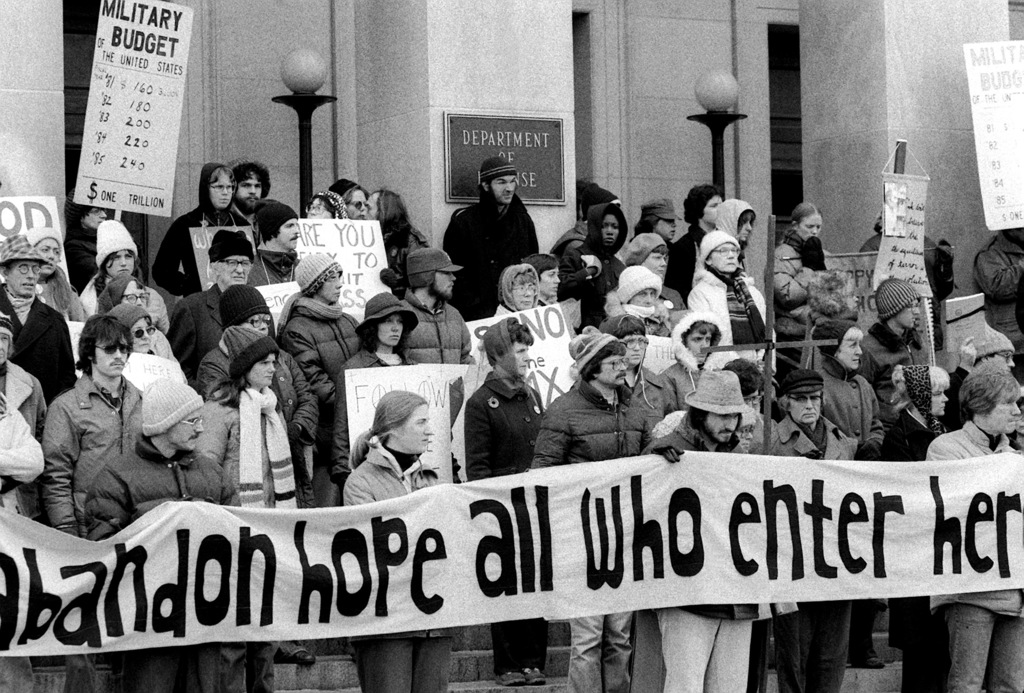


Throughout the past century, thousands of movie and TV producers have secretly cooperated with the American Department of Defense (DoD) to produce pro-war and pro-military films. This collaboration, known as the Military-Entertainment Complex (MEC), is a massive systemic issue facing both the filmmaking industry and society as whole.
Following a decrease in enlistments in the last 40 years, the DoD has turned towards using film as a method of propaganda to drive recruitment, utilizing multiple different military fields to target youth via movies and advertisements. Most famously, the 1986 action movie “Top Gun,” which glamorously depicted life in the Navy, increased United States Aviation Forces recruitment numbers by 500%.
This is a significant and concerning issue largely because the MEC contributes to a separate complex: the Military-Industrial Complex (MIC). The MIC is defined as a “network of individuals and institutions involved in the production of weapons and military technologies.” Contemporary examples of society’s militarization under the MIC include sending the National Guard to cities across America, Immigration and Customs Enforcement (ICE) becoming increasingly deregulated, and the increased militarization of the police force. According to researchers at Marshall University, the militarization of the police force — and of society as a whole — serves to “increase violence towards the groups that are often targeted, as there are now means to inflict excessive violence in gaining new, heavy equipment.” The MEC and MIC are cyclical in nature; in order to succeed, the MIC needs public support and the MEC needs something to support. As such, media under the MEC serves as MIC propaganda.
While pro-war movies are extremely effective at manipulating public perceptions of the military, it is important to note that the opposite may also be true. Since pro-war propaganda leads to society accepting militarization and the MIC, anti-war movies could lead to society recognizing the horrors of war. As such, anti-war films provide an indirect solution in skewing the public against the MIC, thereby helping to prevent the gradual militarization of society. The solution then seems fairly simple: create anti-war films as a subversion of the typical military-combat film, helping audiences empathize with the people war directly affects and creating a public which is less susceptible to the MIC. However, it’s not quite so simple — anti-war movies have existed for a long time, and yet society is still very susceptible to pro-military ideals. This is because anti-war movies are largely subjective. There has long been a debate over whether or not it is even possible to create a film that is truly anti-war. Perhaps the most well-known example of this is the stance of French filmmaker Francois Truffaut, who famously said, “Every film about war ends up being pro-war.”
Discussions around the effectiveness of anti-war films are extremely nuanced, and become even more so when taking into consideration the factors subliminally affecting audiences. Different types of characters, different settings, and even different filming techniques all contribute to how audiences perceive a film’s message. One key factor that has its own real-world relevance is the portrayal of child protagonists within war movies.
Encounters with children during global armed conflicts have increased significantly over the past few decades. Children are being used increasingly often as distractions or even as weapons by many armed groups. In fact, according to a paper by Lindsay Varzarevsky, “The United Nations estimates that 56 non-state armed groups and seven state armed forces were recruiting and using children in 2017.” The use of children in armed conflicts creates a complex moral dilemma for the soldiers who encounter them. They must choose between killing a child and having to live with the guilt of doing so, or sparing the child and risking endangering their troop. This dilemma is especially profound because children are associated with innocence, and as such, harming them is perceived as a “grave moral violation.”
I conducted an AP Research project to investigate the question: “How does the portrayal of children as a symbol of humanity’s purity, when contrasted with the violence of war, affect audiences’ perceptions of World War I and World War II films?” By analyzing 150 movie reviews, 30 from each of five war films, I was able to compare audience’s perceptions of anti-war movies with or without child protagonists, and the differences between the two become abundantly clear.
Reviews on Letterboxd, a movie review app, of “All Quiet on the Western Front” and “1917” — anti-war films without child protagonists — included statistically fewer mentions of feeling empathy towards the characters portrayed and/or their real world counterparts when compared to films featuring child protagonists — specifically “Come and See,” “Grave of the Fireflies,” and “Jojo Rabbit.” Across all reviews sampled, 16.6% of reviews describing feeling empathy for the characters came from anti-war films with adult protagonists, while 83.4% were from reviews of anti-war films with child protagonists.
In “Come and See,” “Grave of the Fireflies,” and “Jojo Rabbit,” the portrayal of children in contrast with the violence of war is central to the message that audiences take away from them. Their subversion of the typical military combat film — movies centered around a soldier’s or a group of soldiers’ journey through war — is what makes them unique in the eyes of the viewer. It draws upon personal experiences. To the average person, who is not involved in the military, the experience of spending time with a sibling is far more relatable than the experience of being a soldier. While loss is a universal part of the human experience, losing someone you couldn’t save is far more relatable than having to live with the fact that you’ve killed someone. As such, the way these movies touch on common human experiences makes them far more relatable to the viewer than movies that focus solely on the horrors of war. Thus, anti-war movies that center children increase the empathy that viewers feel for people directly affected by war.
These findings indicate that viewing children affected by war through the medium of film does create higher levels of empathy, allowing the movie to be perceived as a truly anti-war film. I also found evidence that the way films tackle violence and combat has a substantial impact on the effectiveness of their messaging, as reviewers were not as empathetic for the characters that were portrayed in “1917” and “All Quiet on the Western Front.”
The way that war movies portray different experiences during World War I and World War II changes how audiences view war. Contrasting the innocence of children with the horrors of war can serve as an effective subversion of the pro-war movies promoted by the MEC. Deplatforming and dismantling the MEC is crucial in preventing the further militarization of society. In turn, preventing the further militarization of society under the MIC is vital when it comes to preventing globalized conflicts from occurring in the first place. As former United States president Dwight D. Eisenhower said in his farewell address, “In the councils of government, we must guard against the acquisition of unwarranted influence, whether sought or unsought, by the military-industrial complex. The potential for the disastrous rise of misplaced power exists and will persist.”