

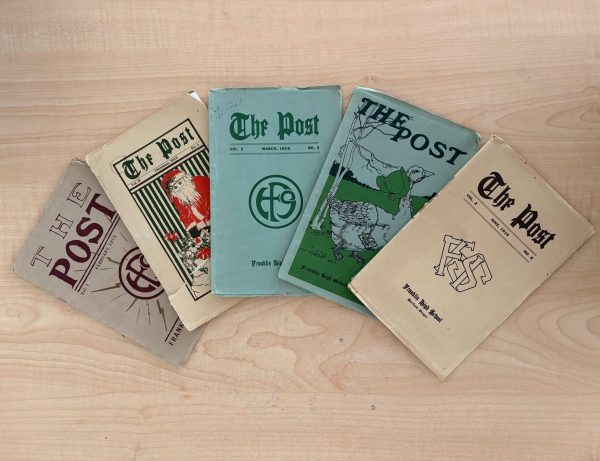
High school represents a significant developmental milestone for adolescents, often accompanied by pressures to make new friends, fit in with certain social groups, and identify personal interests that may shape future pursuits. To support students in this process, Franklin offers a diverse range of electives, including industrial technology, marine science, and, of course, journalism. Enrollment in the advanced journalism class — which produces the Franklin Post, Franklin’s student-run newspaper — requires completion of the intro to journalism course. Both classes are taught by Elizabeth Kirsch, who has served as the Franklin Post’s adviser since 2014. Established in 1915, the Franklin Post has long served as a platform for student voices. Additionally, for those who have worked on it, the experience can leave a lasting impact on the way they interact with media and view the power of their own voices.
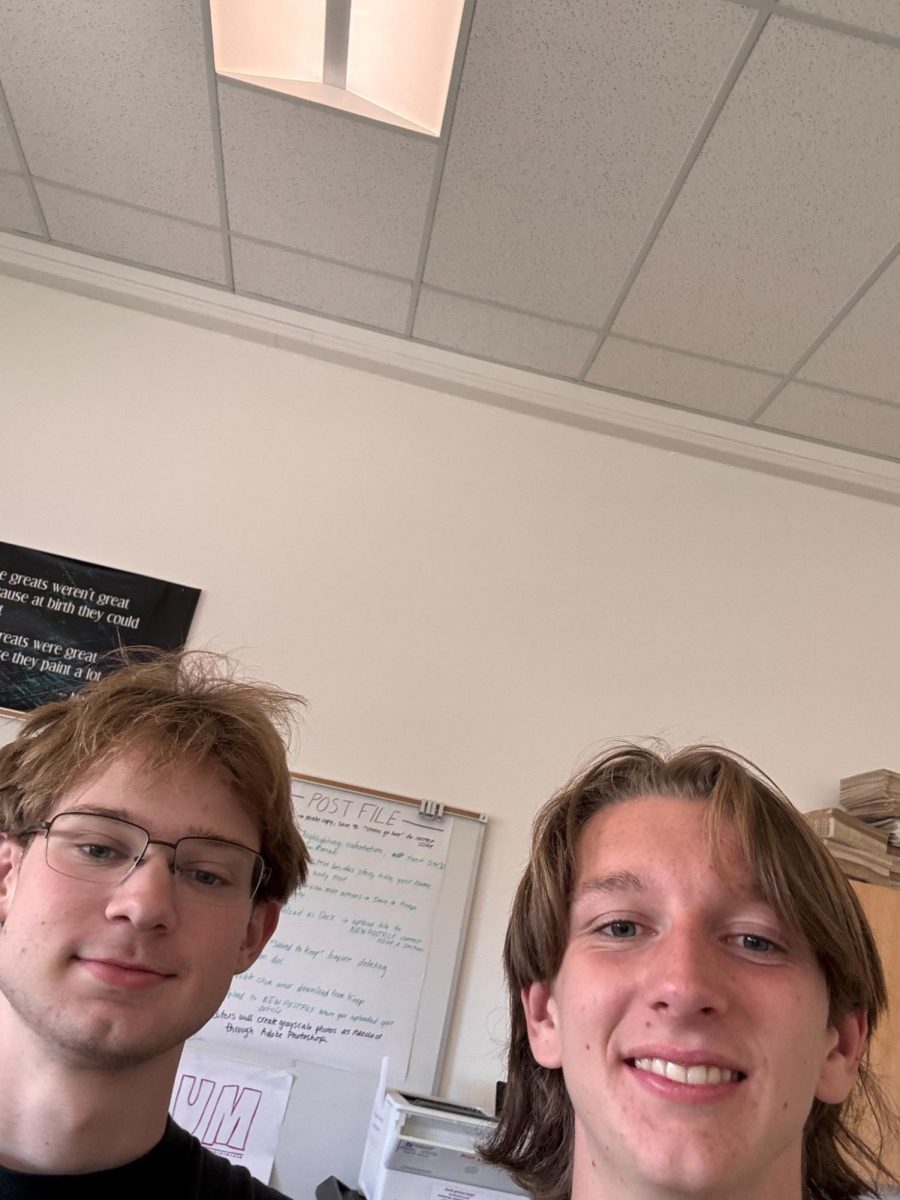
The production process for each of the seven yearly issues follows a structure similar to that of a professional newsroom. It begins with story pitches, followed by a two- to three-week reporting period, during which students are expected to produce well-researched articles that include at least two interviews. The process then moves through multiple rounds of editing before culminating in the publication phase. This period is marked by the paper’s late nights, during which writers and editors stay after school to finalize and design each issue. In recent years, the newspaper has expanded its span, growing from eight pages in 2014 to the 20-page publication we have today.
Former Editor-in-Chief Nathan Wilk, who was on the Franklin Post from 2016 to 2019, explains that his favorite aspect of working on the newspaper was the sense of community and collaboration it fostered. “To create something like a newspaper, serious collaboration is necessary,” Wilk says. He also strongly appreciated being able to cover topics he was passionate about: “My favorite part of being on the newspaper was writing pieces I was actually interested in, and seeing it all come together at late nights, even though they were frantic at times.”
Wilk adds that the experience helped him to develop skills that became essential beyond high school, particularly in writing and editing. “Looking over others’ writing, giving feedback, [and] seeing the same problems with other people’s… or your own writing over and over are just some of the skills I gained,” Wilk says. Similarly, Percy Conrad, a writer and variety editor from 2019 to 2022, describes how, “[Being on the Post] taught me time management, how to collaborate with a team, [how to be] open to feedback and not taking it personally, research skills, and seeing multiple perspectives all at once.”
Producing a well-polished newspaper takes a significant amount of time, which can be difficult to manage as a student taking seven other classes, potentially including Advanced Placement classes. Abby Emrich, a writer and news editor from 2018 to 2020, notes that it was challenging to balance schoolwork and extracurriculars with being on the Post. “Luckily, the whole staff was very supportive, and Kirsch always wanted you to feel challenged, but was also understanding when it came to conflicts and burnouts,” she says. Despite the difficulties in working on the Post, alumni shared that it was rewarding in a different way from normal school. Wilk explains how the process of writing an article varies tremendously from writing an essay for an English class: “I was writing articles knowing that others in the community would read them, not just a teacher.” Writing stories of personal interest is a way for students to express themselves in a way outside of the classroom.
Several former Franklin Post staff members have gone on to pursue careers in journalism. Celina Tebor, who was Franklin Post’s ad manager from 2016 to 2017, now works as a senior news editor for CNN. She became interested in writing after taking the intro to journalism class her freshman year. The class prepared her well for what she does today: “Being on the Franklin Post gave me all of the skills I use today as a full-time journalist,” Tebor explains. She further notes that she learned how to work with people of all different personalities and how to approach strangers for interviews. “This experience changed my life because before, I didn’t even know journalism was an option for a career path,” Tebor describes.
Today, it is increasingly difficult to find a career in journalism, as there are alarming rates of ongoing job cuts. In 2025 alone, media outlets in the United States and the United Kingdom experienced a workforce reduction of more than 3,000 jobs, according to an article from The Tufts Daily. In today’s digital and economic climate, many individuals are beginning to doubt the value of journalists, but the Franklin Post contradicts these arguments. Gigi Bareilles, one of the Editors-in-Chief from 2023 to 2024, explains how writing for the Post changed her views on media and journalism. “I think that as a society, we’ve become accustomed to fast-paced consumption [of] media, both for entertainment and news, and have moved away from traditional forms of news,” she says. “But truly learning about a topic and assessing opinions and information from multiple sides means taking time to understand, which I believe is a better approach to media consumption.”
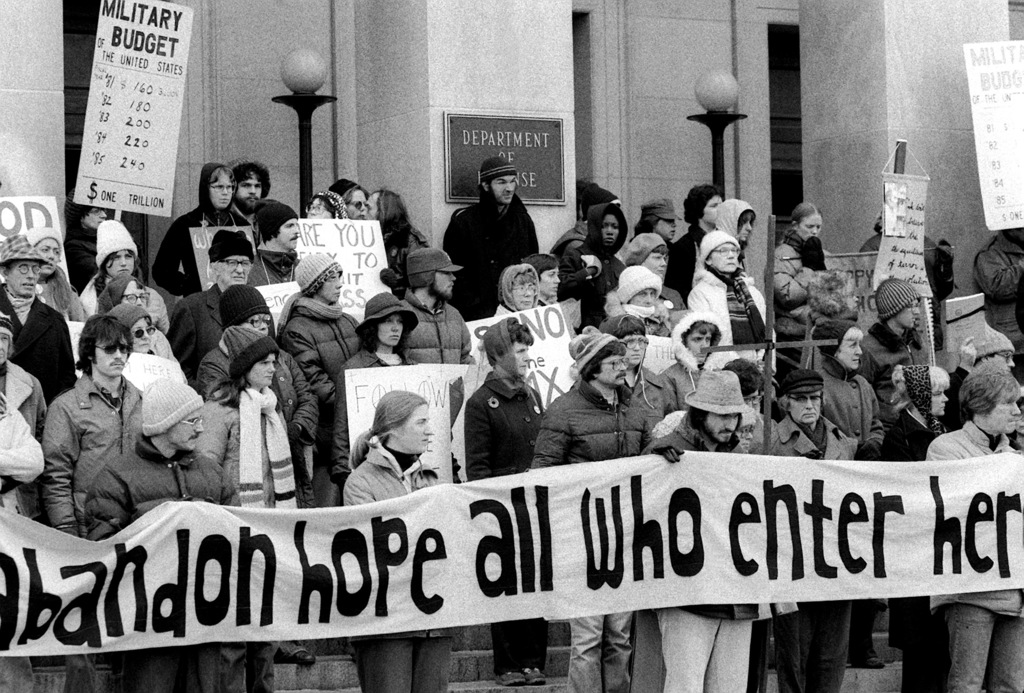
The Franklin Post covers a variety of topics, from protests to film festivals to artificial intelligence in schools. This peer-assisted platform enables students to voice their opinions and inform others in the Franklin community about what is happening around them. Wilk explains that through the Post, he not only was able to educate others about subjects that he was passionate about, but also produce something meaningful with a community of those who shared the same interests. “Being on the newspaper was not just a class; it was a space to make something that could make an impact,” finishes Wilk.