




Planned Parenthood is the United States’ single largest provider of sexual and reproductive healthcare. They provide a range of services, including abortions, sexually transmitted infection (STI) testing, fertility treatments, and sexual education. Portland’s Planned Parenthood affiliate, Planned Parenthood Columbia Willamette (PPCW), was founded in 1963. Since PPCW’s founding, sexual education has been incorporated into their work, and for over 50 years they were the singular largest provider of sexual education in Oregon. “We believe that education is a vital part of the work we do,” reads the PPCW website’s “Who We Are” page. “Sex education empowers young people, families, and community members with essential life skills, positive attitudes and values needed to realize their health and well-being.”
PPCW’s Education Department offered a variety of community events; including peer-to-peer lessons in middle and high school classrooms, trainings and presentations for adults such as PTA members and health teachers, and outreach to out-of-school youth, including those in drug treatment centers and juvenile detention facilities. PPCW’s Education Department reached over 30,000 youth and adults annually across Oregon and southwest Washington.
In a meeting led by PPCW’s Chief External Affairs Officer Christopher Coburn and a member of PPCW’s People and Culture department — the organization’s equivalent of Human Resources — on April 2, it was announced that the PPCW’s Education Department was being terminated, effective immediately. This decision was met with confusion and hurt from the department’s nine former employees — eight educators and one overseer — one of whom had been employed by PPCW for 14 years. The eight educators were represented by the Service Employees International Union Local 49 (SEIU). In order to fulfill layoff notification requirements set by the SEIU’s contract with PPCW, the eight impacted educators were placed on “paid no work leave” from April 2 to May 1. According to Ann Krier and Natalie Burton, two former education and training program coordinators with PPCW, the main reason cited for this decision was the “restructuring” of PPCW. “Their reasoning and their talking points are that the landscape of healthcare providers, like [PPCW], has shifted significantly,” says Krier. “There’s lots of pressure to ensure that our structure is really focused on providing excellent patient care.”
On a nationwide level, Planned Parenthood has been defunded by the One Big Beautiful Bill Act. However, the recently passed Oregon House Bill (HB) 4127 protects Planned Parenthood’s ability to be reimbursed for providing care to patients on Medicaid — even if federal funding falls through. “PPCW wants to spin it like, ‘It’s a changing landscape, and there’s so many threats out there, we have to adapt,’” Krier opines. “[Here in Oregon,] that’s not the case. The threats are real in most of the country, and they have had some impact here, obviously, but it’s not the extreme threat that [PPCW is] painting it as.”
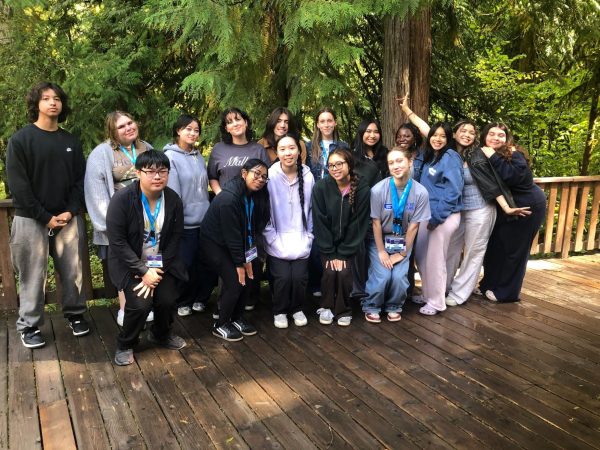
The Oregon state legislature has extensive requirements outlined for teaching “sexual and reproductive healthcare” for public school students in kindergarten through eighth grade. One of the ways Planned Parenthood attempts to support schools in providing this education is through Teen Council, which Krier describes as PPCW Education’s “flagship program.” Teen Council is a peer-led sexual education program for high school students that exists in Planned Parenthood affiliates across the United States. PPCW’s branch of the Teen Council program had been around for almost 20 years. “Teen Council reache[d] about 3,000 or so students each year through their classroom presentations and community engagement,” says Krier. “That is [due to] the work of 30 to 35 Teen Council members who are high schoolers, who suddenly have a voice, and the knowledge … to [provide education about] reproductive justice and reproductive health for young people.”
Teen Council members were informed of the decision via two Zoom meeting options on April 7 and 8, hosted by Coburn alongside Camelia Hison, the former overseer of the Education Department. “I understand that there’s no easy way to go about it,” says Atharva Deepak, a junior at Catlin Gabel who was a Teen Council member for two years. “If you’re an organization and the dollars are tight, you have to start making hard decisions. No matter what, when you’re placed in those hard decision-making circumstances, … your decisions will always be criticized by those affected.”
However, according to Coburn in the original meeting with the Education Department employees, the layoffs were not financially motivated. “The education team was completely funded by foundations, grants, an endowment, and donations,” says Krier. “None of the money that went into the education team came from [PPCW] general funds.” Deepak adds that Teen Council members were not given straight answers about the situation. “They were being kind of coy, they weren’t actually telling us the reason why.” As of this article’s publication, PPCW has not issued any public statements or press releases regarding the cutting of their Education Department. PPCW did not respond to multiple requests for comment.
Despite Oregon’s requirements for sexual education in public schools, Deepak says, “What’s stated in the law is not happening in real life.” He notes that there is a significant gap between law-mandated education standards and what is actually taught in classes, saying, “The law says this, but so many school districts are very, very anti-progressive sex education.”
Other former members of Teen Council agree that Oregon schools do not always sufficiently cover sexual education topics in the classroom. “When I was teaching at schools, I learned that a lot of schools don’t actually teach certain topics,” says Andy Liu, another former member of Teen Council and a sophomore at David Douglas High School. “Without Teen Council teaching those missing topics, kids will … have a missing piece to the puzzle.”
“Teen Council was the program that actually bridged that gap,” adds Deepak. “[We] could be a point of contact [for] … stuff you can’t necessarily easily talk to a teacher about. And now that’s gone. So, so many students are [now left] unsupported.”
Since the beginning of PPCW — and Planned Parenthood as a whole — sexual education has been treated as central to the cause of promoting reproductive healthcare access. “The current threats to reproductive rights come at a time when young people are denied the education they deserve,” said PPCW CEO Sara Kennedy in a 2024 interview with the Portland Tribune. “To make informed decisions about sex and relationships, young people need comprehensive information, essential skills, and access to youth-friendly health care services. PPCW is committed to making access to sex education more equitable and inclusive.”
“I feel that the ‘restructuring’ of education shifts the mission of the whole organization,” Krier says. Burton adds, “[PPCW has] said that that’s not the end of education, but they haven’t clarified what that might look like going forward.” Krier recalls discussion in months prior to the dismantling of the Education Department, as well as brief mentions during the meeting itself, of the establishment of a community health worker role within PPCW. Community health workers are public healthcare professionals that earn a specific certification for having relevant experience or understanding of a certain community. Additionally, they can enroll as Oregon Health Plan providers, which means that they can be reimbursed for by the Oregon Health Authority — effectively subsidizing the care they could theoretically provide for PPCW.
Krier adds that at least three of the jobs opened by the cutting of the Education Department — two revenue cycle managers as well as the marketing and communications role — are now going to be contracted out to other companies, and therefore will no longer be represented by a union. “To me, this [sounds like], ‘We don’t want these people, we don’t want these educators in these roles,’ because we have a tendency to speak truth to power on our team, and the leadership doesn’t like that,” says Krier. “That’s kind of a consensus among the [former Education] team; that this was a very intentional way to get rid of us, [to get rid of] these particular educators.”
As organizations, PPCW and its sister organization Planned Parenthood Action Oregon (PPAO), have been historically very dedicated to ensuring access to reproductive healthcare. PPAO is an advocacy group that “ensures that staff at [Planned Parenthood] health centers and their patients can continue to access essential sexual and reproductive health care and education,” according to the PPAO website. During the 2025-26 Oregon legislative season, PPAO dedicated a significant amount of time and resources towards lobbying for HB 4127, which was passed on March 6 — less than a month before announcement of the Education Department’s termination. Coburn, who headed the PPCW administrative communications to the former employees during April, also serves as the executive director of PPAO. Coburn did not respond to multiple requests for comment.
Burton describes several past instances of “unilateral, top-down decisions” made by the PPCW administration under Kennedy, who became CEO of PPCW in early 2024. “For example, our clinic hours have expanded a bit to offer more evenings and weekends to patients, which is a really good thing, but that does impact clinic staff [and] their childcare, their commutes, and things like that,” she says. “There were never any conversations with clinic staff about how it might look and problem-solving some of those issues.” Burton describes another decision where several distance-only PPCW employees were “asked to return to the office two days a week for the sake of collaboration, but there was no sort of structured way for collaboration to happen, and there was no conversation [around]… all of these things before that decision was made.” Burton says that, though the leadership wasn’t technically violating any rules, the employees were “really upset” about the lack of conversation surrounding those decisions. Similar frustrations around PPCW’s communication with their employees arose following the decision to cut the Education Department.
Krier contends that PPCW’s recent leadership decisions have been more focused on getting new patients into Planned Parenthood clinics, to the detriment of pre-existing PPCW staff and programs. “I think [PPCW] wants to drive more patients to their health centers by using community health workers,” says Krier. “They want to pay those [workers] less money, [and] maybe try and get around them being represented [by SEIU].”
On April 2, the Education Department staff was put on paid no work leave until May 1, because SEIU — the union representing the eight PPCW workers who were fired — mandates a minimum of 21 days’ layoff notice. “PPCW feels that they gave us [more than] the 21 days’ notice because they put us on paid leave for the month of April,” explains Burton, “but we know they’ve been thinking about this for a long time, so why couldn’t the 21 days have also been time that we were working and winding down?” Multiple employees stated that in the original meeting announcing the termination of the department, leadership emphasized this decision was made with extended deliberation and consideration.
After the announcement, the former Education Department employees initiated bargaining sessions with PPCW leadership and SEIU stewards. “We didn’t get a severance package,” adds Burton. “We did ask for one in a bargaining session, but they said no. … [W]e will also get to keep our health insurance [until] May 31, but that was the extent of what we got.” Burton says that the whole experience was “frustrating,” as the PPCW administrators consistently “refused to go off-script, and refused to engage with us as human beings.”
She describes how she and three of her former colleagues were watched by members of PPCW’s People and Culture Department while they cleared out their belongings from their offices at PPCW’s Portland location. “We feel like we’ve been treated like criminals. … We weren’t allowed to just come in and pack up our desk [at] anytime, partially, I think, because they didn’t want us to talk to other employees,” she says. Krier adds, “Restructuring, evolving, call it whatever you want, but don’t treat your employees like they did something wrong.” None of the former Education Department employees were laid off as a result of any wrongdoing.
The eight former employees represented by SEIU have filed a grievance against PPCW because of their perceived violation of the SEIU-PPCW contract terms for layoff notification. “I’d like them not to treat [their] employees like this in the future,” says Krier. “The union is anticipating it being a very challenging bargaining [session] when the contract negotiations come up next year with this particular leadership team.”
Krier notes that the tension between PPCW employees and administration was not always so potent, and attributes some of it to Kennedy’s assumption of the CEO position. “None of the leadership has actually ever really seen our work in action,” says Krier. “They’ve never taken the time to come observe any education session, or talk to any of our community partners.”
Krier’s seniority and the rights granted by her SEIU membership meant that she survived an earlier round of four financially-motivated layoffs in PPCW’s Education Department in 2020, at the beginning of the COVID-19 pandemic. “During that layoff, there was individual communication with each of those people, [and] it was based off of seniority,” she says. “[PPCW] gave them the required three weeks to wrap things up, communicate with their community contacts, [and] pass over projects and programs to other educators. … It was done in a much more humane way.”
Comparatively, the Education Department’s work emails were deactivated immediately after the initial meeting, meaning that they could not contact any of their community partners nor any youth members of Teen Council. These community partners include over a dozen middle and high schools; Oregon Youth Authority, which runs juvenile detention facilities in Oregon; queer youth groups; the YWCA of Greater Portland; and more. “We’ve got hundreds of different community contacts and community partnerships … that we’ve developed over the years,” says Krier. “We’ve just basically ghosted a lot of those people.”
The fate of those community partnerships is unknown to the eight former PPCW educators. Burton describes how she was able to reach out to one community partner — Kellogg Middle School, where she is a member of the Parent Teacher Student Association — to let them know of the cancellation. As for the other education events planned? “I no longer had access to my email and I didn’t have the contact information of my community partners,” says Burton.
“I really feel for the educators who have spent years supporting us, they have mentored us, they have written our recommendation letters,” adds Deepak. “They were just laid off, with no notice, and I think that was incredibly incompassionate, and is not reflective of what Planned Parenthood stands for.”
Out of concern for Teen Council members missing out on the last quarter of their 2025-26 term, Krier emailed a member of the PPCW People and Culture Department. After this email was sent, Hison was brought back onto the PPCW staff temporarily as the only one of the nine former employees permitted to work during the three weeks of “paid no work leave.” Hison was tasked with wrapping up Teen Council and ensuring participants would get their volunteer hours, letters of recommendation, and certificates of completion.
Former Teen Council member Mazzy Hopkins is trying to continue providing sexual education at her high school, the International School of Beaverton, along with some of her peers, also former members of Teen Council. “We were talking, and one of the most valuable things about the Teen Council program is that it’s taught by peers, because it definitely is a different vibe when you are taught sex ed by an adult rather than someone you see as an equal,” she says. “It’s still being workshopped, but I know that there are definitely some students at my school … that would want to continue this in our own way, even if it’s just a little club.”
While Krier and Burton both acknowledge the significance of HB 4127 — a landmark bill for protected access to reproductive healthcare services for patients on Medicaid or Oregon Health Plan — Krier questions the timing of the Education Department’s termination announcement in relation to the bill. “Planned Parenthood has that reputation of being a good community partner, and showing up. [D]oing education and health services, that’s kind of our reputation. And then right after that, April 2, they come and say, ‘We’re done with education.’… A decision like that takes months to figure out and [PPCW] gave no indication [of it] to any lawmakers,” alleges Krier. “It seems really odd to succeed in getting money from the state to reimburse for Medicaid patients and then immediately … turn around and fire a bunch of people,” comments Burton.
Moving forward, former employees and Teen Council members are unsure about the future of sexual education in the Oregon area. “I mean, we don’t want to punish PPCW as a whole,” Krier comments. “That doesn’t solve anything. … The people that work [on] the frontline [of PPCW] are great, amazing people, this is not a reflection on them. This is a reflection on the leadership of PPCW and the poor choices that they are making.”
At the time of publication, PPCW’s website has not been updated to reflect the cut, and they have made no public comments pertaining to the status of the Education Department.





Sofia • May 28, 2026 at 10:52 am
Thank you for you in depth analysis! We appreciate the community having the same concerns about public health. This effects our minor patient population extremely. – PPCW staff member