


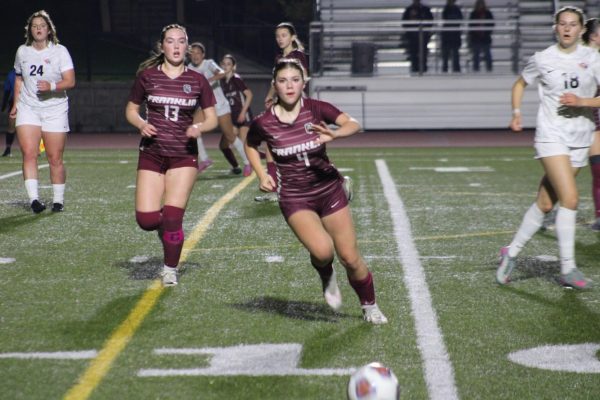
Right now, seniors in high school across the country are contemplating big decisions. College is a huge commitment for many students, and for student athletes an additional variable is added: whether or not to continue their sport post-graduation. College sports can offer many pathways for students to succeed and to continue playing the sport they love. On the other hand, they require a substantial time commitment, especially for Division I and Division II athletes. College athletics offer many benefits but also create new challenges; variables like scholarships, admission rates, and enjoyment are just some that current high school students must consider.
For Franklin senior Silas Combs, athletics were a large part of his ultimate college decision. “When I was first looking for a school, I knew I wanted to play baseball as long as I could.” He has chosen to continue his athletic career at Clackamas Community College where he signed with their Junior College baseball team. He plans to study construction management, and is ready for all the commitments that come with his new team and home. Combs details that he has been playing baseball, among other sports, throughout his entire high school career.
Parental and peer influence also plays a considerable role in a college decision, whether it involves athletics or not. “Searching for a college was hard,” Combs says. He continues to describe the process as “very stressful because it felt like [he] wanted to make everyone happy.” For the most part, Combs expresses his situation as lucky, and is happy to stay close to home. He values family being nearby, and going to school in the Portland area makes more sense financially to meet his goals.
Another Franklin senior who is considering college sports is Amelia Wilde. Wilde is currently considering her options, one of which involves continuing her sport, while the other does not. Wilde has played all four years of soccer in high school, and may continue playing in California. “I am deciding between the University of San Francisco and San Francisco State University,” Wilde explains, but clarifies she would only play college soccer if she attended San Francisco State (SFSU). SFSU competes in NCAA Division II, and provides Wilde room to “make sure [she is] in a place [she] wants to be with or without soccer.”
Due to SFSU being a Division II school, Wilde is prepared for the rigorous training she may be in for. Practices for any sport — and division — in college can range from early morning to late night training, with additional time in the weight room on off days. Sports, academic life and finances will heavily influence her decision, and Wilde plans to make that decision when she is ready.
The college recruitment process generally consists of a few key steps, including applying for or receiving recruitment letters and camp invites, evaluations of the athlete, verbal offers and scholarships, and finally, the signing of athletes. These events will evaluate traits including their personal character, athletic ability, academic eligibility and placement for the team. Academic eligibility is also assessed when signing a student, meaning they should meet all the class and GPA requirements of their school.
One of the major aspects in a college application when deciding whether to play a sport in college comes down to scholarships and financial responsibility. Excessive loans and fees can be a deal breaker for students considering continuing their sport after graduation. While a sport can be important to anyone, many athletes rely on the support of scholarships throughout their college career to afford their respective school. Scholarships can help urge a student to continue playing their sport beyond high school, and keep them afloat under the weight of college decisions. Although in Combs’ situation, the need for a scholarship was not dire, he shared that it was a “nice bonus” to have one when applying to Clackamas.
Most recruiting happens in the early years of an athlete’s high school career. Division I recruitment usually takes place during the summer before junior year from a school, but students are more than welcome to reach out to schools they are interested in. Applying early for scholarships and gaining recognition is a huge part of athletic recruitment, and recruits are recommended to spend a few hours a week on their applications.
From a coaching perspective, recruiting processes can look different and more specific depending on the college. James Hoppel, head baseball coach at Clackamas Community College, describes the process as “recruiting athletes [that are] solid character[s], guys that will be able to fit into the culture that we want in the baseball program, good students, [and] guys that are team oriented first.” These traits are assessed through things like showcases, recommendations, and third party recruiters, meaning players must be preparing in advance if they want to play college sports. Combs explains that in his experience attending meetings and training for Clackamas Community College, it was a lot of effort to get attention. Drawing this attention and attending showcases during a player’s free-time requires additional time during the already busy college application season.
Division I and Division II are highly selective and the environment can become incredibly competitive. Division I and II athletes are expected to be committed year round to their chosen sport. This can result in more students leaning towards Division III and Division IIII sports. While sports can be an important part of college, other factors can play into a college decision for a student, and how they want to continue their sport.
Due to the high time-commitment in any division, college recruitment processes can be slightly controversial, as it weighs upon high school athletes heavily. In an article published on Inside Higher ED, author Jim Jump argues that kids “aren’t ready intellectually, physically or emotionally to make decisions about their futures before the junior year in high school, and for most of my students that’s still early.”
Overall, a student’s decision to play sports in college is a complex and difficult consideration, especially for aspiring athletes. Components like scholarships and financial aid can determine whether a student will commit or even apply to continue their sport in college. Factors of competitiveness, character, and even academic ability play into a decision. These requirements and assessments are huge, and Franklin students are, if not already there, reaching this turning point for their decisions. Supporting our athletes through this process is important and necessary, and I couldn’t be more excited to see what paths our senior athletes at Franklin will take.