


Since the 1920s, the movie industry has captured the world. From the silent era to the first animations and beyond, movies have been a major part of society and pop culture. People’s definitions of classics and old movies have changed a lot over the last hundred years. Some younger people think of the early 2000s or the 1990s as old, while others think back to the ‘70s and before. Teenagers and younger people especially don’t watch movies they consider old. The younger generations tend to associate words like old or classic with boring, black and white films with no plot. This is a very common misconception about older movies. Luckily, there is still a community that ventures into the past, and with the rise of apps like Letterboxd, which allows users to review and discover new films, there are increasingly more teens interested in older films.
Though there are many online lists with titles like “50 Best Old Movies” or “The Best Classic Movies Everyone Should Watch,” which can be a great way to find older movies, they tend to be extremely similar, only representing a few movies out of the hundreds of amazing classics. They often include well-known classic movies like “Gone with the Wind,” “Casablanca,” and “12 Angry Men.” While these are popular films for a reason, they are not necessarily representative of what young people are drawn to, in substance or time period.
Lennon Vidricksen, a former Franklin student, avid movie fan, and Letterboxd patron, considers films from the 1950s and before old, and “mostly gravitate[s] towards the ‘60s and the ‘70s.” Unlike “Casablanca” and “12 Angry Men,” Vidricksen is drawn to films that are “campy, weird, and maybe a little lesser known.” Interesting and surreal visuals are an important part of their enjoyment of a movie. Grace Vaupel, a current senior at Franklin, is also a fan of visually exciting films, although she would consider the ‘70s to be old.
The ‘70s are the perfect decade for the surreal and unusual movies that both Vaupel and Vidricksen enjoy. The Hays Code, a set of guidelines established in 1934 to ensure “that no picture should ever ‘lower the moral standards of those who see it’,” was abolished in 1968, which allowed directors and actors in the following decades the chance to explore themes and ideas previously unavailable to them.
They did so with gusto, and the results are exactly what Vaupel and Vidricksen are drawn to. Vaupel specifically mentions the 1971 movie “O’Lucky Man” starring Malcolm McDowell. The movie follows the 1968 film “If…,” and centers on Mick Travis, played by McDowell. Vaupel describes it as “a ‘Marty Supreme’-esque, comedic thriller.” “Marty Supreme,” a 2025 film starring Timothée Chalamet, was described by Steve Erickson in his article for the Art Fuse as “a wild trip” and having a “manic quality,” traits that “O’Lucky Man” seems to share.
One of the main draws to “O’Lucky Man” for both Vaupel and Vidricksen is Malcom McDowell himself. “It’s mostly his style of acting,” says Vidricksen. “You know that he’s acting, but you believe him anyway. It’s so over the top, but it somehow fits in everything he does, and you just can’t take your eyes off of him. He’s very striking,” says Vidricksen. Good acting is something that is very important in making a film work, but can also be extremely subjective. There are constant debates about the capabilities of various actors, but it is without a doubt a make-or-break aspect of films.
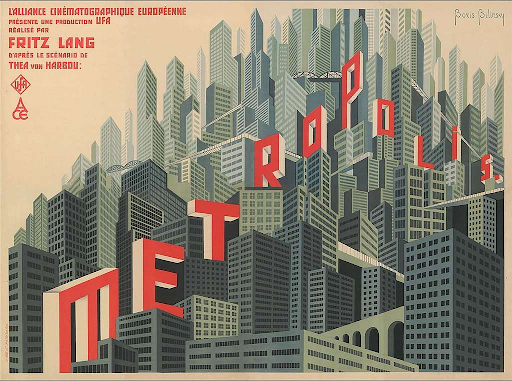
Vidricksen also enjoys watching silent films, which is rare in this day and age, where the phrase “silent film” has come to be associated with rough imagery and boring narratives. This is a big misconception; contrary to the restraint of silence resulting in boredom, it can result in movies where visual storytelling takes center stage. A perfect example of this is the 1927 film “Metropolis,” directed by Fritz Lang. It is a highly celebrated German expressionist film that is known for its amazing cinematography, and for being one of the first feature-length science fiction films. In a similar vein, Vidricksen enjoyed the unique 1954 Kenneth Anger film “Inauguration of the Pleasure Dome.” Vidricksen says of Anger’s directing, “It’s like these really visually insane, almost plotless films, there’s no dialogue or anything.” The lack of dialogue is made up for by the film’s notable vibrant colors.
As the movie world continues to expand and develop, it can be great to explore works from the past. Not only is there a treasure trove of unique and exciting films, but it is also amazing to notice how much the industry has changed in every aspect. From actors and directors to impressive visuals and music, every decade and era has something wonderful and unique to offer.