


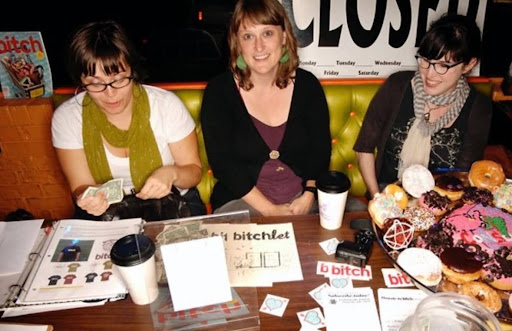
Bitch Media founded Bitch magazine, a Portland-based nonprofit organization. The magazine was an early independent feminist publication founded in Oakland, California, in 1996 that provided an unexplored perspective and played a significant role in feminist media, and in 2007, Bitch Magazine relocated to the Portland area and became an iconic piece of the city’s history.
During that period, movies, television, and books lacked representation, and popular culture perpetuated misogynistic stereotypes. Hollywood and the modeling industry presented unhealthy standards, and this magazine became the sole source of representation for many young girls who craved seeing their real-life experiences reflected in the media they interacted with every day.
The founding editors, Andi Zeisler and Lisa Jervis, created a piece of ongoing media that allowed pop culture to be seen and translated through a feminist lens. “We wanted to write about things people already cared about,” Zeisler explains.
San Francisco had become a tech mecca —a city that is a major hub for technology — by 2007, and rising costs in the Bay Area made staying in the city a non-viable option. Portland, however, was a place where many people could feel comfortable being themselves; it welcomed the bizarre, and creativity thrived. Bitch Magazine immediately integrated into the local indie culture and zine scene. Zeisler says that “Knowing you’re in an environment that supports people doing things without a professionalized résumé [was] incredibly important.”
Connected to many DIY and independent printing presses, Bitch Magazine gained international recognition in feminist media. The magazine made people realize they could use their voices for change. However, the magazine bid farewell in 2022 after wrestling with financial instability. It had become impossible to run the magazine sustainably and maintain its foundational ethics of care. In a 2022 interview with Slate, Zeisler says, “This feels like a particularly bad time for Bitch to go under. It’s never been clearer than right now that there’s a vast difference between feminism as an aesthetic and feminism as a foundational need and a foundational process of liberatory politics.” Although it is no longer in publication, it has left a lasting impact on its readership and shows how small-scale projects can have just as much prominence as larger ones.
Franklin librarian Ellen Pederson says libraries often “try to get as many people’s different, unique viewpoints as possible.” Several libraries in recent years have also begun to gather independent media that covers a large amount of subject matter. Both the Franklin library and various local libraries offer independent media and DIY resources. Franklin’s zine shelf covers a range of topics, from comedic to serious, offering something for everyone. Pederson says her favorite zine is one called “Death by Tums.” She explains that she loves how hyperspecific the topic is and finds it humorous and endearing. Franklin’s library also carries materials that help students create and display their own personal ideas. Zines push the boundary of who is allowed to count as a writer. Pederson asserts, “Anyone can make a zine if there’s something that you care about.”
The high quantity of independent media in libraries helps bring more ideas to the shelves. Pederson explains, “Smaller presses sometimes can have more freedom than a big publishing house.” She continues, saying, “In Portland, there’s an ethos of trying to expand our horizons, really valuing diverse perspectives and trying to bring those to the forefront.” New and standing independent presses that serve as a lineage of Bitch Magazine are incredibly important and are at home in libraries all around.
Zeisler advocates for unique ways of protesting. “Activism takes a lot of different kinds of personalities,” she says. Feminist media serves as a space where that kind of diversity in activism is welcomed to be explored. She continues, “You need people who are constantly in action, … but you also need the person who’s going to compile lists of names and addresses.” Although there is an escalating amount of uneasiness surrounding our world, Zeisler encourages stepping back from mainstream media to avoid burnout. Like many people, she gets caught up in the mainstream, but has developed a strategy to encourage her to read instead. “I set a timer for 20 minutes, and then I get sucked in,” she explains. Sometimes, removing the pressure of completion can help alleviate a lack of motivation. Similarly, Pederson advises kids to persevere even if they don’t think they like reading. She says, “Find your niche, what works for you. That might be the most popular book this year that all your friends are reading, but that also might be something that nobody knows about.” Bitch Magazine has had an impact on young readers, and its legacy continues to inspire younger generations to read, create, and fight for what they believe in.