

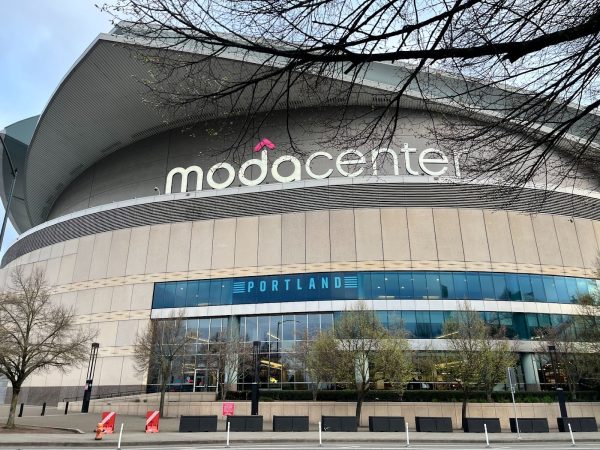
In March 2026, the Oregon State Legislature passed a bipartisan bill designating $365 million to subsidize renovations to the Moda Center. The arena is home to the city’s NBA team, the Portland Trail Blazers.
Senate Bill (SB) 1501, which establishes a framework for funding these renovations, passed the Oregon House by a margin of 43-13. The bill then went to the Oregon Senate, where it passed 24-6. The approved funds in the bill will go towards updates to the arena and the nearby plaza.
The deal comes after the Trail Blazers’ incoming owner, billionaire Tom Dundon, threatened to move the team out of Portland if the city did not commit to publicly funding the renovations. Dundon bought the team for $4.25 billion in August 2025, and the sale was approved by the NBA Board of Directors on March 30, 2026.
The bill rests on multiple conditions, including the creation of a joint authority between the state and the City of Portland to oversee the arena; an agreement that the Trail Blazers remain at the Moda Center over the next 20 years; and a finalized sale of the team to Dundon and his investors.
SB1501 declares these renovations an emergency, although that urgency feels perplexing to some. Portland City Councilor Tiffany Koyama Lane explains that a large concern for her is how, “A lot of people felt caught off guard by how quickly funding for the Moda Center moved forward at the state level, especially since it involves a large amount of public money.”
The total cost of renovations is currently estimated at $600 million. In addition to the $365 million SB1501 provides in subsidies, Portland Mayor Keith Wilson has pledged $120 million in city dollars towards upfront costs and $14 million annually to operations. Multnomah County Chair Jessica Vega Pederson stated the county is prepared to contribute a minimum of $88 million.
While the bill requires a financial commitment of hundreds of millions from the City of Portland and Multnomah County, Dundon and his investors are not obligated to contribute financially to the renovations. This type of agreement, with the entirety of costs shouldered by the public dollar, is almost unprecedented in the NBA. In similar deals, private contributions from investors or team owners have almost always funded the entire or partial costs of renovation.
Amendments aimed at addressing this fact have been proposed. “Other modern NBA arena deals have included some level of private contribution,” writes Oregon Senator Khanh Pham to the Post. “I introduced the Blazers Taxpayer Protection Amendment … to SB1501 … which directs the Joint Authority to discuss a private capital contribution and revenue sharing with the people of Oregon. This way, the Blazers can do well, and Oregon can too.”
According to the City of Portland, the Moda Center generates $600 million in annual revenue and attracts 1.5 million visitors a year. SB1501 has been supported by Wilson, Governor Tina Kotek, Senate President Rob Wagner, House Majority Leader Ben Bowman, and Portland City Council President Jamie Dunphy. In a joint statement supporting the bill, the group described the Moda Center as an “economic engine,” stating: “Keeping the Blazers in Portland for years to come is a top priority for our economy.” Many officials have also championed the bill with the goal that renovations ensure the Moda Center attracts national concert tours and large athletic events, generating additional revenue.
The Trail Blazers have played in Portland for 55 years, and at the Moda Center for 31 years, establishing the team as a valuable contributor to Portland’s commerce and culture. The franchise’s current lease on the Moda Center expires in 2030.
“No one wants to be the legislator who let the Blazers get away,” says Edan Krolewicz, a Blazers fan and tech entrepreneur. Krolewicz organized an opposition campaign against SB1501 called “Rip City Not Ripoff.” “I think they let the fear of the team leaving, as small as [the chance] is, influence their emotions and let the lobbyists really hammer home this kind of fear that should not exist.”
Krolewicz is among those who disagree about the severity of Dundon’s threat to relocate, as doing so would be costly and require broader NBA approval. “A lot of people are putting their sports brain on and not their economic brain or their rational brain,” says Krolewicz.
Critics of the bill worry that in acquiescing and taking on the total cost of renovations, Oregon will lose their leverage in the deal. “The public is going to lose a lot of money and subsidize someone who doesn’t need it,” says Krolewicz, adding that Dundon “can fund it and still make a killing on his return.”
Others worry that the bill will hurt taxpayers, or wish the deal included more specific protections. “Hundreds of constituents have reached out expressing support for investing in the Blazers and the Moda Center — and they want to know that their tax dollars are protected in that investment,” writes Pham. Many officials want to make sure that in the next steps of the deal, Oregonians also benefit from this investment. “When public dollars are used, people deserve clear information about what’s happening, who benefits, and what comes next,” says Koyama Lane.
“Now that the state has passed this legislation, a lot of the responsibility shifts to local governments, including the Portland City Council, to make sure the next steps are done right,” says Koyama Lane. “That means holding the line on transparency and pushing for strong agreements that support local workers, fair wages, and real community benefits tied to the Moda Center.”