

Reducing building height limitations and increasing housing development opportunities are among the new suggested changes to Portland’s Central City 2035 plan to increase residential development and business around Portland. The draft of these proposed changes will be released later this month, followed by public hearings, revisions, and an evaluation by the Portland City Council.
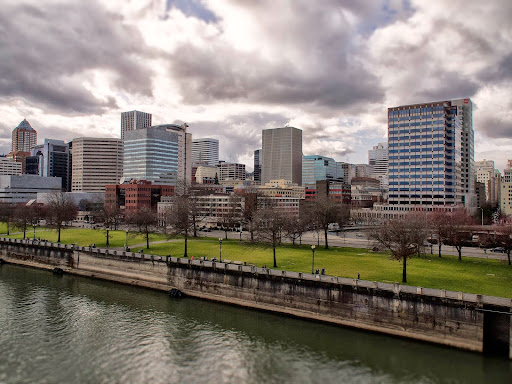
The Central City 2035 plan was adopted in 2018 to update policies relating to the prosperity of Portland’s city core, which includes downtown, as well as nine other densely populated districts, including the Lloyd District, Pearl District, Lower Albina, and Central Eastside neighborhoods. To more effectively implement these policies, city workers with the Bureau of Planning and Sustainability (BPS) developed the Portland Central City Code Amendments Project (CCCAP). “CCCAP should be viewed as a midcourse correction to a ship slightly off course,” says Troy Doss, one of the planners contributing to the project.
The updated draft will allow food carts to be permitted in zones for retail sales and service uses, rather than being restricted to parking lots. This will allow more opportunities for lower-income individuals to start their own business. “[Food carts] have been sort of a success story in Portland for what we call low-barrier-to-entry business opportunities,” says Nicholas Starin, another city planner working on the CCCAP. Food carts require less money to start up than other businesses, making them a more accessible option. Providing more areas for them to operate in is a step towards the BPS’s larger goal of improved equity.
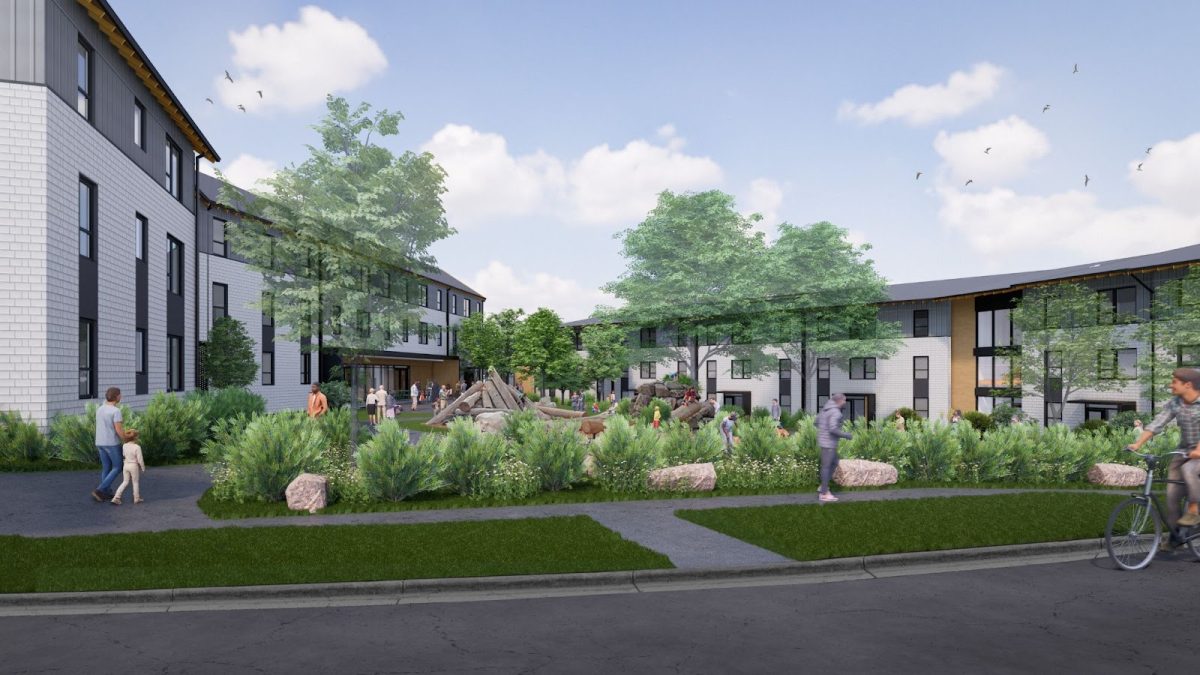
The CCCAP will also be enabling more housing development in Lower Albina by changing some properties from a General Industrial 1 (IG1) zone to a Central Employment (EX) zone, which can be used for both housing and businesses. City planners have been working alongside urban development organizations serving Portland’s Black communities, such as the Albina Vision Trust, whose mission is to rebuild the Albina neighborhood and reverse the effects of targeted demolition and relocation. This zoning change will minimize restrictions on residential development due to the EX zone being for housing in addition to commercial and industrial buildings.
A new floor area bonus, which expands the limits on how big residential buildings can be and increases the permitted square feet of apartments with at least two bedrooms, will also be implemented across the central city. “Currently, approximately 80 percent of all housing in the Central City consists of studio and one-bedroom apartments,” says Doss. Because of this, the BPS hopes to encourage developers to build units with more bedrooms so that larger families can live more comfortably in the central city.
The BPS will also be allowing buildings of at least 20,000 square feet to use solar panels to meet their environmentally sustainable roof requirement. The Central City 2035 plan currently includes a policy stating that 60% of the roof must be an eco-roof — a drainage system topped with a layer of greenery. However, Starin says it has been hard to implement.
Consequently, the CCCAP proposes solar panels as an option for meeting this requirement. “It’s keeping the intent of having sustainable development practices … but gives more flexibility,” he says.
The first draft of the CCCAP was released to the public on Jan. 12; people could attend open houses and information sessions about the plan, or submit their feedback on the Map App. Public comments were closed on Feb. 13, and the city staff is currently using the received feedback to make the updated proposed draft, which will be released in March. This process will be repeated, only this time, the draft will be sent to the Portland Planning Commission. Here, it will be revised again as a result of formal public hearings. In its new form, the recommended draft, it will be sent to the Portland City Council for a decision.
After receiving input from the public, both Doss and Starin have found that the feedback has been advocating for more extreme changes, rather than disagreeing with what’s already been proposed. “Things like building heights and things like parking, always … arouse a lot of passions, and oftentimes it’s hard to get agreement,” Starin says. “[But] so far, it’s been pretty positive.”
While the majority of public comments viewable on the Map App build on the CCCAP’s suggested changes, Micah Meskel, the Urban Conservation Director at the Bird Alliance of Oregon, expressed opposition for the CCCAP’s solar panel policy update, stating, “While we appreciate the proposed amendment efforts to increase development of rooftop solar, we do not believe this should be to the detriment of the other community benefits that ecoroofs provide.” His comment explains that ecoroofs successfully address the environmental issues faced by the central city, such as the urban heat island effect and urban stormwater, while solar panels fail to adequately manage these equally.
The Bird Alliance of Oregon contributed to the Central City 2035 plan in 2018, influencing an ecoroof policy enforcing 80% coverage. They now hope to return it to that original policy, suggesting solar panels layered on top of an ecoroof system. “We really want to see the integration of both, gaining some sustainability benefits of renewable energy production,” says Meskel, adding that ecoroofs’ infiltration abilities make it a cheaper option as they can replace costly underground stormwater infrastructure.