

Education systems have long reflected the values of the societies that created them. In many classrooms, students can recite the names of prominent leaders, writers, and scientists with ease — yet most of those names, if not all, belong to men. The absence of women from school curricula is not accidental, and it has shaped — and will continue to shape — how generations understand knowledge, power, and history. That is, unless a change is made.
Women have been left out of history and social studies classes largely because education systems were created in a culture where men held most of the power, but it is also due to lack of access. For most of American history, women were excluded from decisions about their own lives. They couldn’t own property independently until the late 1800s, vote until 1920, or access higher education in the same way a man could. Their exclusion from participating in public life has been used to justify their continued absence from textbooks, only perpetuating their lack of recognition.
With the present surge of anti-Diversity, Equity, and Inclusion (DEI) rhetoric in education systems, the impact of omission is still felt today. According to the Council on Social Work Education, in 2025, 23 anti-DEI bills in more than 15 states became law, and 26 bills had final legislative approval. Across the United States, growing political and cultural repercussions against DEI efforts — driven by new state legislation and executive orders, like executive orders 14151 and 14173, which mandate removing DEI staff — are reshaping how historical narratives are taught for the worse.
DEI initiatives — historically rooted in efforts to address discrimination and give a voice to traditionally marginalized groups — have helped ensure that women’s contributions are included in school curricula. These efforts have grown out of decades of advocacy following civil rights legislation about equity of access in the 1960s and later educational reforms that emphasized diverse perspectives in teaching and research. However, these recent anti-DEI laws and executive orders are challenging what can be taught and who can teach them, and few states are pushing back against them.
Oregon is one of the few states that hasn’t passed an anti-DEI bill in its education system, fortunately. Kimberly Livesay, a social studies teacher at Franklin, explains that Oregon is one of the few states with ethnic studies standards, which are guidelines that require the integration of histories, contributions, and perspectives of historically marginalized ethnic groups. Livesay herself ensures that her classes, U.S. History: Latino History and Government and Economics, cover women’s history that is often overlooked in society. “It’s vital that we’re making the effort to highlight ways in which women led movements of resistance, the way that women led labor movements, pushed legislation, the way that women have shown up and resisted slavery, even,” she says. She continues, explaining the importance of women’s history showing up in different parts of society, not just in social studies classes: “I don’t think women’s history is something you can confine to just a social studies class.”
It is also vital to ensure that the women’s history being taught is multifaceted, including women of all races, ethnicities, and backgrounds. “Putting an equity lens on our curriculums, ensuring that women are actually represented, that when we teach things that we’re going through and actually are serving our curriculum, and we’re doing audits to ensure that there are multiple perspectives,” Livesay explains regarding ways to include women in curricula.
Certain subjects in schools, specifically social studies classes, tend to be predominantly taught by men. According to Zippia, 57.2% of history teachers are male, which can often influence how the narratives are told. It is not just what is being taught, but also who is teaching that history that influences how knowledge is perceived. “As a woman teaching economics, my identity means I’m going to be mindful of the inclusion of those things,” Livesay says.
Similarly, Franklin social studies teacher Rachel Draper recalls no inclusion of women in her classes from her youth. She explains how even the AP Modern World History curriculum she teaches rarely has representation of women, and students often have to seek out their own information outside of what is being taught. “I try to include women in my own ways, but it’s challenging to include women in the curriculum without it feeling like it stands out because of the way it’s structured,” she says. However, it shouldn’t be the responsibility of teachers to go out of their way to include women in their lessons, nor should that fall to students. While Oregon tends to be progressive, the state’s educational standards still reveal faults surrounding what is being taught and how.
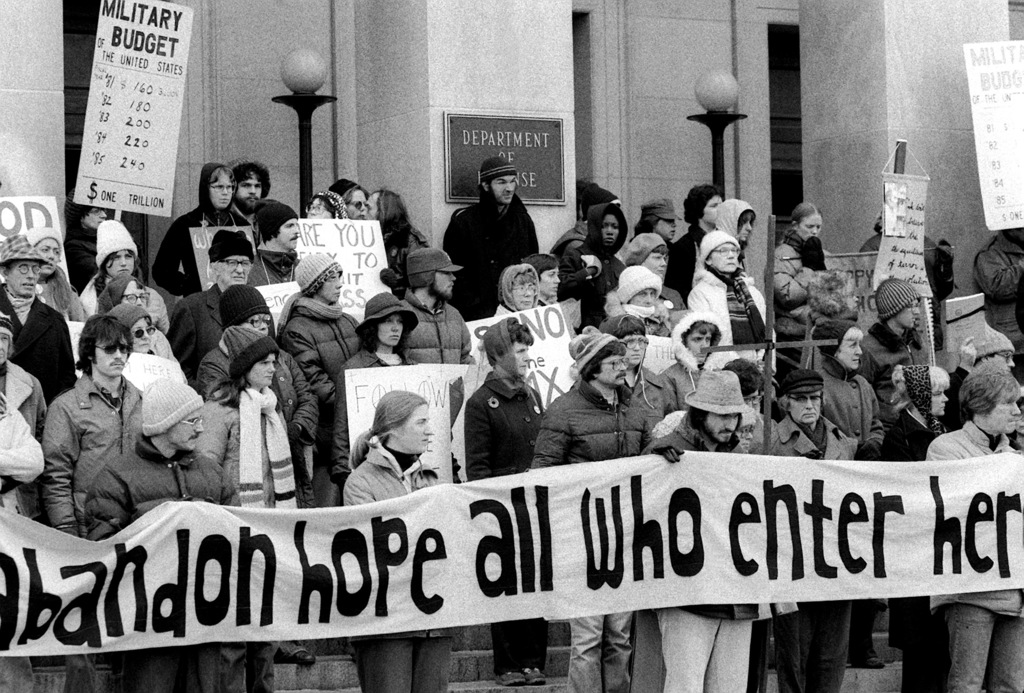
Women play a significant role in society and have been the strongest protestors historically, from the Bread and Roses Strike in 1912 to the Women’s March in 2017. When history leaves out key women who had an impact on social and political change in society, it sends a message that says men are the only key factor, leaving young girls the impression that women have not done anything to contribute. A lot of the time, this exclusion is so instilled in our society that it goes unnoticed.
As students, we can feel that we are unable to impact a large-scale patriarchal problem such as this. However, Livesay explains how students are the driving force for change. “I constantly hear from students that desire to hear those stories and desire to understand deeper parts of history, [which] is a huge role students play, continuing to give feedback and express what they want to learn about,” she expresses.
Students being exposed to diverse experiences would lead to more students feeling accepted in the community and a better understanding of our history as a whole, instead of constantly leaving women out. Franklin junior Emma York explains how her classes do not include women in the lessons, and when they do, it is used in a performative way. “I feel like it’s a little self-defeating to use these women’s struggles as a tool for our own self-actualization, when in reality we shouldn’t have to struggle as much as they did. The fact that anyone has to struggle to that extent is negative,” she explains.
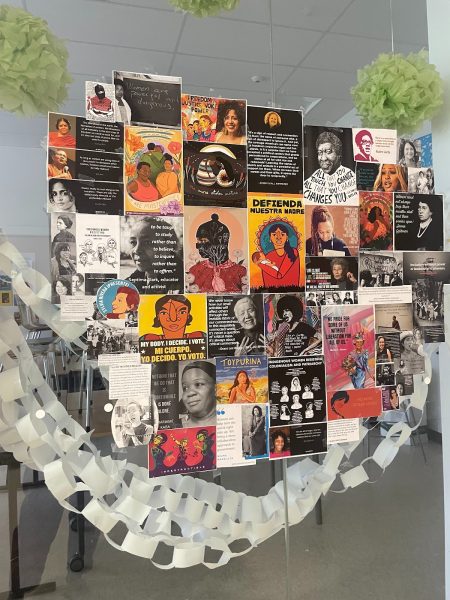
The inclusion of women’s history is vital in today’s era of anti-DEI. Livesay informs, “We have to be mindful of the fact that we need to be brave and have the willingness to include it [women’s history].” Speaking up and educating others on this issue is essential. Women’s History Month is celebrated in March to honor women’s contributions, achievements, and struggles throughout history. Educational institutions should use that time to address the fact that women’s roles were often overlooked in a traditionally male-dominated society, making sure to weave diverse female figures into existing lessons and highlighting women in the community by adorning school walls with posters. Livesay explains the questions she believes we should consider as a community: “It’s looking for ways that you see yourself in history where it’s not casting people as heroes or villains, but saying, ‘How do I see a model for progress? What does that look like?’”