

It is a historic time to be participating in protests. Around the country, marches, rallies, and demonstrations are closing down streets and calling for action. As a current high school student who generally follows politics but can’t yet vote, I have begun to question what action I can take to create real change. This question also applies to broader society, because while swaying the vote is vital in changing the government, voting only occurs so often. Often as young people, our immediate response when wanting to take action is protesting. This school year alone, there have been numerous walk-outs and marches led by students from Portland Public Schools (PPS) high schools.
Dr. Shirley Jackson, a sociology professor at Portland State University who has special experience in social movements, explains that protesting can “be a way of responding to needed change if one does not have the resources to get people’s attention.” She elaborates that, “Protesting can work if the authorities are not responding to protesters in such a way that protesters are made to seem like the problem, rather than the issue they are attempting to bring to everyone’s attention.”
Under the current presidential administration, what I believe to be right has deviated from the standards of civil disagreements. Under the Trump administration Immigration Customs and Enforcement (ICE) officers have swept the streets of cities all over the country, notably making it the deadliest year for those in ICE custody in decades. President Donald Trump has attempted numerous executive orders that violated the Constitution — one being his attempt to revoke birthright citizenship for children of non-citizens — and ultimately shown a lack of care for the people a government should be serving: its citizens. This abuse of power made me reconsider how much a protest can truly sway an administration that doesn’t care about its constituents. Protest can still be very powerful as a display of dissatisfaction and solidarity, but, in today’s political climate this power is not derived from persuading the presidential administration towards legislative change.
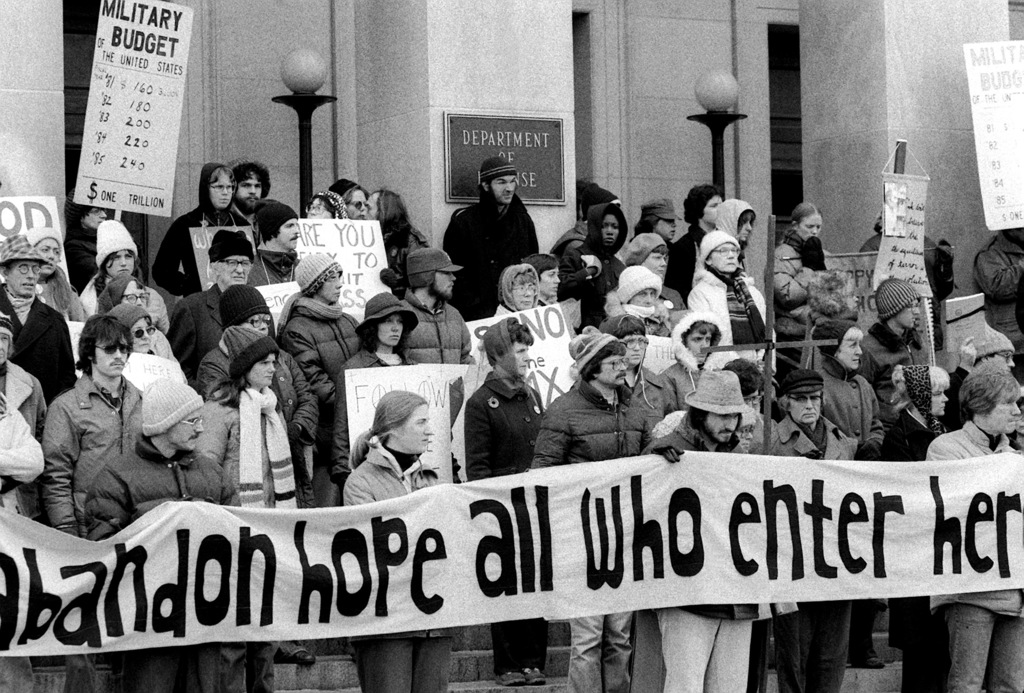
Historically, the impact of protests and community action has been widespread and influential. Notable examples include the Civil Rights Movement, women’s suffrage movement, the 504 sit-in, and the Stonewall riots. These national movements often began small, similar to the protests we have seen locally today, and led to concrete change, now appearing in history textbooks across the nation. One infamous study confirms this. Often referred to as the 3.5% rule, the study states that those engaging a threshold of 3.5% of the population have never failed to bring about change. However, it is important to consider how the political climate has changed since those movements took place, in order to understand the impact of protesting today.
The Trump administration built their campaign on a foundation of division and fear, touting the idea that previous Republican leaders have failed the public, and Trump was the solution. Just recently on Feb. 12, the Public Broadcasting Service (PBS) reported that, “In a social media post, Trump blasted Oklahoma Gov. Kevin Stitt, a Republican who chairs the NGA, as a ‘RINO,’ meaning Republican in Name Only.” Few dispute the fact that political polarization is a major problem in the United States. According to a study from Pew Research Center, in October of 2025, just over half of Americans reported seeing extremism from either party as a major problem. “We are, and have been for quite some time, at the point where the two opposing [political parties] are systematically and intentionally undermining each other’s legitimacy,” explains Johanna Dunaway, political science professor and research director at Syracuse University’s Institute for Democracy, Journalism and Citizenship. Issues such as increased polarization are one core reason that modern-day protests seem less impactful to me. If people are continuously dividing more extremely on a political basis, then their likelihood to be understanding of their opposers minimizes.
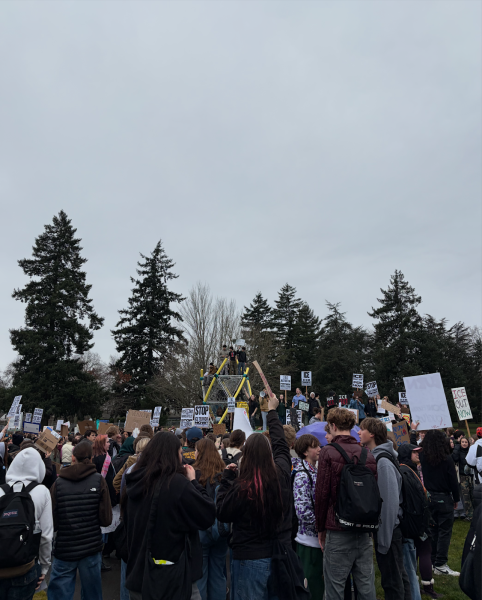
On Jan. 30, individuals across the country participated in a national shutdown, not attending school or work, and instead protesting against Immigration and Customs Enforcement (ICE). One such demonstration occurred outside of McDaniel High School in Northeast Portland, where PPS students gathered to speak out and advocate for immigrant rights. Starting at 11 a.m., students walked in the pouring rain, raising up signs, chanting, and leaning on their community. “We’re here to show up for our community and fight [against] the injustices that America is facing,” says Clark Vandiver, a senior at Lincoln High School. Standing beside him was friend and fellow Lincoln senior Brooks Mclemore who affirms this, explaining, “We want to say that we will not tolerate this … the people are not in agreement with [the Trump administration’s] policies,” continuing, “The most important impact is just letting them know that we will stand with our immigrant families throughout Portland. We want to say that we will protect them, we will help them. We will show them that not everybody shares these fascist ideologies.”
Many other students mirrored Mclemore’s statement of supporting the Portland community, one of the most impactful outcomes that could have been spurred by this protest. For immigrant families who are afraid of expressing opposition to ICE, being able to express their opinions while knowing that others around them who are safe are willing to help them is incredibly meaningful. “It’s really important to show up for your neighbors and your friends and family because I think the issue is closer to us than people really feel, especially considering how white Portland is, … it’s easy to feel like the issue doesn’t impact you, but it really does,” explains another protestor, Emmi Riddle. Leaning on their community for support is a huge benefit for individuals who are able to gather to protest.
I have attended a few protests in recent years, and after participating in this one at McDaniel, both out of curiosity and support, I learned quite a bit. In an era where media is at our fingertips at all times, I often find myself spiraling into a more pessimistic outlook, but the McDaniel protest allowed me to affirm my own values with like-minded individuals, and I found it very meaningful. However, to me, finding a like-minded community isn’t always reason enough.
Oftentimes, protesting becomes something people fall back on to take action, thinking it will fix things, when other actions need to accompany it. As reported by The Guardian in 2025, there was a 133% increase in protests against the Trump administration since his last term. The national “No Kings” protests have been occurring since June 2025. While it is very powerful to see these displays happening across the nation, calling for the attention of president Trump is clearly not making a difference. “The time has to be ‘ripe’ for a protest,” Jackson explains. “Paying attention to the political, social, and economic climate is important. Who is in a particular political office or position is important to the success or failure of change.” This is a hard thing to delegate, and determining the right time to protest may be, to an extent, subjective.
While I do think other actions need to happen, that doesn’t mean protests aren’t impactful. Small-scale demonstrations, within local governments or businesses, are a major way to draw the attention of those in power of such establishments. It is far more feasible to demand action — via protest — from your senator, than from the president.
Some of the largest protests during the Trump administration have been successful. Following weeks of protests in freezing temperatures after the deaths of Renée Good and Alex Pretti in Minneapolis, Border Czar Tom Homan pulled 700 ICE officers out of Minnesota. President Trump, in a rare display of reevaluation, told NBC news he learned to use a “softer touch” in Minneapolis.
In addition, reasons for large-scale protests against actions of the federal government definitely do exist, their impact just might not be concrete change. For swing voters, or individuals who choose not to vote, seeing their family, friends, and general members of their community feeling very passionate about certain issues could persuade them. A study published in Social Science Quarterly found that protests can heavily influence voters. Protests with liberal ideology lead to a greater vote percentage for Democrats in that area, and the same goes for Republicans and protests for conservative causes.
Furthermore, drawing media attention and highlighting injustices on big outlets can have a big impact, calling for action from your local government. Yet, as I see it, protests are most impactful when they are accompanied by other actions. If a protest is also an economic disruption, it is far more likely that it will attract the attention of government officials. An article published by Science Direct writes that noncooperation actions, like economic boycotts, can “potentially make a much greater impact on the conflict [compared to] purely symbolic acts.”
While I personally believe that the Trump administration won’t be influenced by the action of protest, others do, and that is far enough reason to continue to protest. It is an exercise of one of our most important protected rights, and a peaceful one at that. Peaceful protests aren’t harmful, and standing up for your beliefs should by all means continue, but protests alone are no longer creating change. If people want to see real change happen, action beyond protests needs to occur.
Methods of creating change beyond protests are a lot vaster than many people realize. However, research, in my eyes, is always the first step. Knowing about the issues you oppose is crucial in understanding how to make change.
Once you are informed about the cause you are supporting, there are many peaceful ways to advocate for change. One way is by contacting local legislators and government officials. Every call received by a senator is logged, meaning that there is a real-time count of voter sentiment. This count can be used to inform representatives about the priorities of constituents — which can encourage them to align with these beliefs in order to increase voter approval in the following term — and to back up claims they use when among others in the Senate.
Volunteering with local humanitarian or advocacy organizations is one of the most direct ways to see and help create change in your community. Monetary donations are also a huge determining factor in how much organizations can actually do. Some examples of organizations in Portland who are supporting immigrant families in light of the actions of ICE include the Portland Immigrant Rights Coalition, Latino Network, and Interfaith Movement for Immigrant Justice Accompaniment Program. These are just some of the many organizations and ways that every individual can take civic action beyond protesting, and advocate for greater change.