


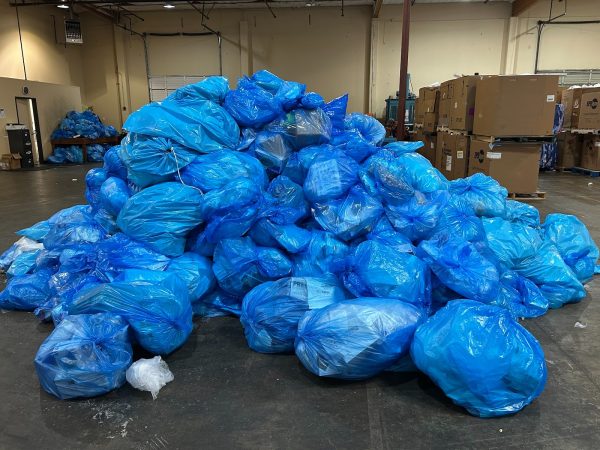
As the enduring issue of climate change poses rising threats worldwide, it is important to address the crisis and understand the potential significance of simple actions individuals can take. Recycling provides pathways around the overuse of new materials and the high quantity of waste that ends up in landfills. Greater levels of recycling directly contribute to less mining, drilling, and logging for resources, helping to conserve natural resources and cut down on carbon emissions. So what can we do to help combat climate change? Recycle, of course! Providence Health & Services is committed to doing just that, right here in Portland.
Providence Health & Services, founded over 180 years ago, established the Providence Recycling Program in Portland in the early 2000s. The program is based out of the northeast Portland Clinic, right off Halsey, in a building separate from the hospital. Run by Senior Program Manager for Environmental Stewardship Michael Geller, the program assists Providence’s goal of becoming carbon negative by 2030 and of cutting down on waste production in hospitals across the state. “We have an acronym called WEACT,” Geller explains. “It stands for waste, energy and water, agriculture and food, chemicals, and transportation. These are what we work on to help reach our environmental stewardship goal.”
On hospital campuses, specialized bins are made available for specific recyclable waste. Once the recyclables have made the journey to the recycling center in Northeast Portland, Providence takes everything in and begins the hand-sorting process. Providence will accept many types of materials, including the majority of plastic items found in hospitals, like film plastics, trays, and utensils. They also accept all types of cardboard, which is later sent to the International Paper Company. Styrofoam, though rare, is accepted, and the majority of these plastics and other materials continue on to be processed at Denton Plastics, a company founded in Portland.
Denton Plastics, which has been recycling in Oregon since 1983, takes in the sorted materials from Providence and begins the production of grinding, pelletizing, compounding, and washing the plastics. “These steps optimize recycled plastics for performance and consistency,” says Mara Draganic, senior account executive for Denton Plastics.
Although the plastics provided by hospitals are not repurposed for medical devices due to Food and Drug Administration restrictions, they are turned into many other things, and Denton can even make custom products by request. In addition, the newly deconstructed plastics can be shipped to other molding companies across the Pacific Northwest to make other products. Through their efforts, Denton aims to tackle the climate crisis by creating a sustainable plastic economy for everyone, and educating organizations on how to best recycle through industry-wide consulting services to find out what’s best for customers. Denton also partners with Metro Investment and Innovation grants to promote their recycling and reduce Portland’s waste.
Beyond the logistics, the heart of Providence’s program is said to lie in the hands of their community and employees. In collaboration with Full Life — an organization dedicated to helping adults with disabilities find employment — Providence staffs its program with those looking for job training and experience, creating a social impact on its community. “My favorite thing about my job is working with the employees,” says Ulysses Hammon, supervisor of the Full Life staff. “Seeing the smiles on their faces and them asking me questions is my joy.”
These employees typically work a four-hour shift, with around 20 people per shift sorting through the bins. The flexible work hours and weeks provide individuals with ample time off and give the program the room to scale up its working capacity as needed.
“I like seeing the growth of the [employees],” Geller explains, when asked about his favorite thing about being the director. As the foundation of the program, the employees are vital to ensuring that it keeps running. The work that they do is important to keeping Providence hospitals clean and healthy. “If you ask them, they’re saving lives, just like nurses.”
In addition to paid labor, there are also volunteer opportunities available. The volunteer days are held quarterly but, due to insurance requirements, are exclusively open to Providence caregivers. “The primary goal of these days is to provide caregivers with a deeper understanding of the recycling program, particularly in relation to the items they place in the blue bags for recycling,” Geller says. Allowing healthcare workers within Providence to experience the program helps to educate about the significance of recycling and spread awareness about the program. Providence is dedicated to expanding its knowledge to others through this hands-on experience, encouraging sustainability in their work and everyday life.
Providence has been working towards recycling on a mass scale, refining this process through the creation of its own program. “They always make me preface it by saying, you can do this in Providence, but nowhere else,” says Geller, clarifying: “There are many different plastic items that [the city and county] can’t take because it goes through an automated sort line, and they can’t take everything.” The ability to recycle such a wide variety of plastics and waste makes Providence unique. Their push towards sustainability through the recycling of diverse materials is gaining momentum, and it helps Providence to reach its carbon-negative goals for the years ahead.
Providence Health & Services is committed to sustainability and creating a healthier, more efficient environment for the future. To reach a circular economy, a society must have a dedication to reusing old materials constantly to generate new products. This aims to create a healthier future by producing less waste and limiting the usage of fossil fuels. Providence follows these ideals: devoted to building equitable foundations for climate justice and providing education to all people.
Though this program has not spread outside of Oregon, Providence plans on expanding its program throughout its hospitals and maintaining strong connections with its partners. By continuing to recycle, Providence hopes to invest in a healthier planet and take action towards environmental change.