


Valentine’s Day, which falls on Feb. 14, is a day to celebrate the love in your life. Traditionally, couples will buy chocolate or flowers for one another and go on romantic dates, like a fancy candlelit dinner. For single people, new relationships can blossom around Valentine’s Day from the many romantic events scattered around the city, all meant to celebrate a time when love is in the air — or at least it’s supposed to be. In reality, for those without partners, paper hearts in every window can be a painful reminder of what they are “lacking.” PR Newswire published a survey which found that 43% of single people report feeling immense pressure in their dating lives from Valentine’s Day, and one in five said they wished the holiday could be canceled altogether. This evident societal pressure isn’t good for individuals in relationships either, as it can pressure couples into spending money on traditional Valentine’s Day-themed gifts or dates that they may not actually want, but feel like they should.
Despite being a holiday all about love, Valentine’s Day has become controversial, and for good reason. Business Insider criticizes the occasion, saying that not only are people expected to spend hundreds of dollars to make the day supposedly perfect, but the pressure from Valentine’s Day can also make couples more likely to break up. Criticisms of the holiday are not new. An article originally published in Time Magazine in 2008 writes that Valentine’s Day is “a holiday that has no idea of what it’s really celebrating.”
However, some people and organizations have their own ways of celebrating the holiday, focusing on companionship and love beyond romance, which can help to make the holiday enjoyable for everyone and build community, even for those of us who don’t have an interest in romantic relationships.
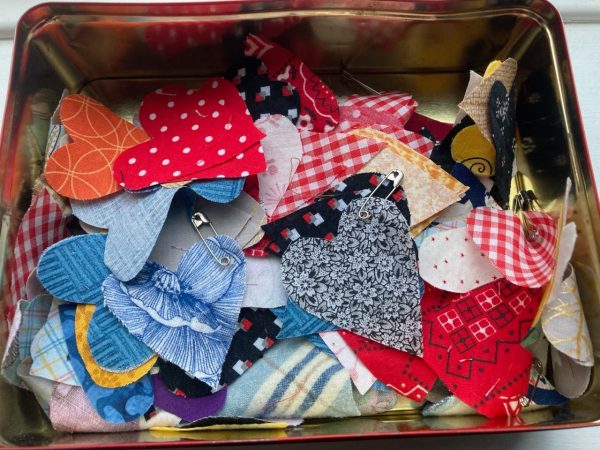
In elementary school, it is common for children to make paper valentines for one another, cute cards often accompanied by messages of friendship and small candies. However, this tradition tends to fade among friends as people age and enter more serious relationships. Laura Czarniecki, a local Valentine’s enthusiast, says that she “used to make paper valentines” for friends, family, and coworkers, but “switched to fabric because it is durable and wearable.” Now, every February, she cuts small hearts out of colorful, patterned fabric and carries them in a tin to give to her loved ones and the people in her community, who can use safety pins to attach the hearts to their clothing.
Czarniecki says that, “Some of my family and friends reuse their fabric hearts to patch their sweaters or their slippers, and some of them pin them to a hat or jacket and wear them year-round.” The tradition, which she started 19 years ago at a food co-op in Minnesota, may seem small, but it brings light and love into the lives of many people around her. Czarniecki even says that one of her friends is “thinking of getting a tattoo of one of my heart pins as a symbol of our love and friendship.” As Czarniecki’s ritual goes to show, small gestures don’t need to cost a lot of money to be meaningful, and they can go a very long way in fostering connection and relationships — which is what Valentine’s Day should be all about.
Valentine’s Day can also put a lot of emphasis on purely romantic relationships, letting friendships and other bonds fall to the wayside, so if going out is more your style, but you want the chance to celebrate with your friends too, there is a day for you. Popularized by the political sitcom “Parks & Recreation” in the 2010s, women around the world celebrate Feb. 13 as “Galentine’s Day.” According to a Cosmopolitan article, it is “an unofficially-official holiday that’s all about celebrating platonic love between all your friends in your life,” and is typically celebrated with activities such as parties, gift exchanges, and spa days between female friends. You don’t need to identify as a girl to take your friends out for brunch, or even use the term “galentine” if it seems too cheesy, but for some, it can be a good excuse to spotlight and appreciate your platonic relationships.
For single people, or those simply uninterested in expensive romantic dinners, there are many other events on Valentine’s Day around the city. This February will be Lewis & Clark College’s 18th annual (Anti)Valentine’s Day concert. According to Katherine FitzGibbon, professor of music and director of choral activities at the college, “It’s a lighthearted, often humorous, take on Valentine’s Day that features singers from across Lewis & Clark.” The concert is advertised for “people who are single, or not otherwise in a Valentine’s day mood,” and features songs about unrequited love from many genres, including “musical theater, jazz, pop, classical music, and opera.” Whether you are looking for a way to escape romantic celebrations or simply want to enjoy choral music, this concert is for you. Just make sure to buy tickets early, as it tends to be quite a packed event.
Traditionally, Valentine’s Day is a highly commercialized holiday. However, more and more retail organizations are moving towards community-focused events for the holiday. JD Cox, who started the Spectrum Art Market, a “2SLGBTQIA+ pop-up market featuring artists from the Portland-Metro area,” says that, “People are tired of capitalism and the constant grid of ‘what [is] the next holiday to spend money on.’” They aim to make the market “a way for the community to engage with art” through events hosted throughout the year, including a Valentine’s Day card–making event focusing on using secondhand materials and celebrating queerness and community.
If you would prefer to buy your Valentine’s Day gifts at a store, rather than at an event, you can still spread love in the community by purchasing from local shops. Jenn Lazar owns the gift shop Citizen Ruth, where she sells “pop culture and social justice-related goods as well as … handmade jewelry.” As a small business, Citizen Ruth does not have the budget to advertise for Valentine’s Day, but Lazar notes that she still “curate[s] a special section in the store with a red/pink motif and all kinds of gifts that might work for a cool Valentine’s Day gift.” February can be a slow time for small businesses, and Portland has no shortage of locally owned stores that you can support if you want to buy gifts for your friends or partner.
Traditional Valentine’s Day celebrations are costly and can put harmful pressure on everyone. Unconventional celebrations can help people celebrate in a way that is true to them and their loved ones, and put genuine gratitude above expensive expectations. Events for lovers and haters alike can be found throughout Portland. Even small gestures like handing out valentines to friends and acquaintances may seem cheesy, but are an excellent way to better existing connections and foster new ones.