

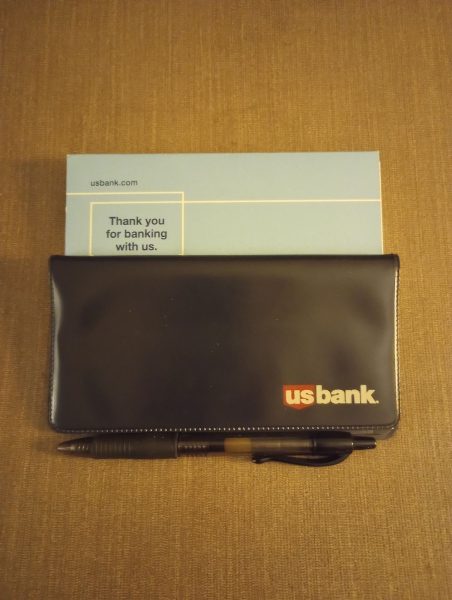
Do you know how to write a check? File your taxes? If you do, when did you learn? For many people, their first experience with financing is when they get their first job. It can be a confusing topic to navigate, and oftentimes you’re left fending for yourself. Personal finance classes aim to give students the preparation and knowledge needed to manage their money after graduation.
Franklin currently offers personal finance as a Career and Technical Education (CTE) elective class for sophomore through senior students. The class is taught by Jose Losoya, who has been teaching personal finance at Franklin for eight years. His knowledge of finances comes from working in banking for 10 years before becoming a teacher. Personal finance is also a dual credit course, which means Losoya works in cooperation with Portland Community College, allowing students to earn both high school and college credit from the course. Franklin senior Bailey Barrett is currently taking the class and says that the opportunity to receive dual credit was a big motivator for her. “It’s really helpful and relevant to what I want to major in, which is accounting,” she explains.
The class covers a wide range of topics, including taxes, budgeting, credit management, loans, and insurance. Losoya says the class aims to prepare students for what their futures will look like: “Basically, what do you want your life to look like when you are 60, 70, or 80 years old?” He adds that honesty is a big part of this, saying, “Many people have the grand idea of becoming CEOs or CFOs or doctors or lawyers, but we have to be more realistic with ourselves if we are going to follow through with those dreams.” One of his biggest goals for his students is to improve their decision-making skills and learn how to avoid costly mistakes by giving them confidence and knowledge.
According to a 2024 survey conducted by the Council for Economic Education, 35 states require personal finance for high school graduation. This number has increased significantly since 2022, when fewer than half that many states required it. Losoya says he approves of personal finance becoming a more widespread high school necessity because he believes that, “personal finance class is one of many courses that can teach young individuals how to prepare for being a responsible, independent person.” Barrett agreed, emphasizing the importance of learning personal finance skills, citing budgeting as a class topic she has found useful, and saying she would recommend the class to others.
While many have supported the increase in high school personal finance classes, there is another side to the coin. Some feel that personal finance classes do not actually increase financial literacy in students. This argument stems from the idea that students will not fully grasp concepts and scenarios taught in a classroom because they do not accurately reflect real-life situations.
Another potential concern raised is that students will not retain enough information by the time they get a job to properly apply it. Although these are real concerns, there are plenty of studies providing concrete evidence to the contrary. According to the Federal Reserve, “High schools across the country found that state-mandated financial education resulted in both increased exposure to such information and improved asset accumulation.” Although they also recognize that an improvement in financial behaviors does not necessarily come from an increase in information, the majority of their evidence indicates that personal finance courses are helpful.
Losoya is aware of these criticisms of personal finance but finds it difficult to agree. He says that in order to have a successful class, it takes the combined efforts of the independent roles of the teacher, students, and classmates to make it work. “Your role can vary depending on situations and points of view,” he says, “but all three need to put in their parts and efforts to make it successful.”