

Imagine a neat backyard with short green grass; a small, non-native tree; maybe even a pool. This yard might seem clean and well-kept, separate from the natural world. However, underground, you would see that the tree’s roots are spreading far, sending water through the soil into stormwater drains and limiting native plant growth from thriving in this seemingly manicured environment. While these yards appear controlled and provide outdoor socializing space, they don’t always fit into the broader ecosystem.
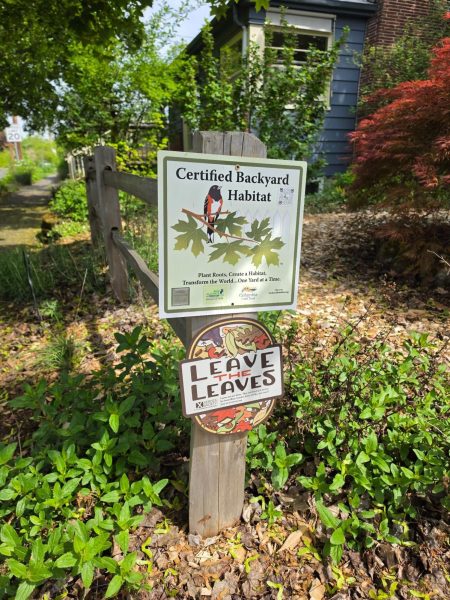
Now, imagine another backyard with birdhouses, native animals, and plants that attract lots of native pollinators. Because the environment already supports these species, these yards require far less irrigation, fertilizers, and maintenance. Debbie Kaufman, a Backyard Habitat Certification Program (BHCP) participant with over 60 different native species in her backyard, uses this philosophy with her plants. She explains that naturescaping, which is the process of collaborating with nature in landscaping, “supports the native pollinators, insects, and birds. It is important to provide areas where they can get their favorite foods and shelter.”
Kaufman finds joy in creating a home for the plants and animals in her yard. “I love watching the beautiful native plants grow,” she says, “along with knowing I am doing some good for pollinators, birds, the soil, and the environment.”
The Portland Water Bureau and the Portland Bureau of Environmental Services challenge the norm that backyards are meant to be private, manicured spaces by encouraging residents to understand their impact and create an environment where nature and people can coexist. Portland’s rainy environment leads to surface runoff into neighborhoods with homogenous, flat green lawns. According to the U.S. Environmental Protection Agency, rain flows from roofs, through drainage systems, into rivers, which create fast-moving currents that cause toxic algae blooms and water pollution.
The BHCP, run by the Bird Alliance of Oregon, helps people with properties smaller than one acre — as well as community areas of any size — support species native to the Portland environment. Encouraging more people to host native plants supports year-round pollination and reduces the need for extensive yard maintenance such as lawn mowing, watering, and trimming. The program offers three levels of certification with increasing criteria: silver, gold, and platinum. According to the BHCP website, the certification requirements include the removal of invasive species, the implementation of native plants, and stormwater management.
Dominic Maze, an environmental regulatory coordinator at the Portland Bureau of Environmental Services, explains, “The program does things that the city can’t really do with public dollars.” Additionally, BHCP operates on a sliding scale in order to make certification more accessible to economically disadvantaged residents who are passionate about restoration and conservation.
Invasive species are plants, fungi, and animals that encroach on native species, preventing growth and, in some cases, wiping them out. One example is the emerald ash borer, a beetle that burrows into native ash trees, disrupting their circulatory water conduction systems and thinning their bark. Untreated trees rarely survive these infestations, and, according to Portland Parks and Recreation, 72% of ash trees in Portland are infested with the emerald ash borer. Invasive species often spread faster and further in condensed urban environments like downtown Portland. Maze explains they also “devalue natural areas, disrupt trophic webs, and take advantage of the types of disturbances people create on a landscape that then decreases ecosystem services we rely on for clean water.”
Despite the positive environmental impacts of backyard habitats, challenges can arise when encouraging more sustainable habits. Green, simple yards appear easier to maintain despite actually requiring more water and work. Some people just do not know where to start, or believe that doing something small cannot make a real difference to the ecosystem. But in a bustling city environment, these mini ecosystems are crucial to the survival of native habitats. Maze explains it can be helpful to look at aerial images of neighborhoods to see the progress people have already made. “You’ve filled in a hole where there was no stepping stone for an insect or a pollinator to be,” he says. “Your little backyard patchwork just plugged a hole with a habitat.” Maze encourages people to continue habitat restoration, even if it is something small. “I like to think it all adds up.”
Restoration is not just for property owners, either. Teens can join environmental volunteer programs where high schoolers can give their support, or even apply for paid summer jobs and internships, such as the Youth Conservation Crew (YCC), which hires 14- to18-year-olds to work on teams that focus on maintaining local trees and green spaces. Both the YCC and the BHCP intend to create spaces that bridge the divide between humans and the ecosystems that surround them. Maze encourages people to go out into nature and discover the city’s species: “Get out there with your homies and go have fun.”