


Adults often tell teenagers to “enjoy it while it lasts” and not to take for granted the years of our youth. These years are the prime time to be out and about; we have more freedom than when we were younger, but the full responsibilities of adult life haven’t yet hit us. Many parents tell stories from when they grew up, regaling how their lives were vastly different from the way we spend our time now. Specifically, they hone in on the fact that they spent more time outside the house than we do now. Their claim is backed up: a 2025 survey commissioned by Super, Natural British Columbia states that, “American Gen Z spends 25% less time in nature than Gen X — because they don’t like going out alone and get too bored.”
One reason this shift may have occurred is due to a lack of low-cost third spaces for youth to hang out today. Getting food, seeing a movie, or going to an arcade are all things teenagers may enjoy doing regularly, but their cost can be a barrier. However, hanging out at home or watching a movie on a friend’s couch can oftentimes seem more appealing than going out and spending money. “In the ‘80s and ‘90s, teens went to the mall … and you didn’t have to buy anything, you could just walk around,” says Maggie Novario, the teen librarian at Holgate Library in Southeast Portland. “And malls [still] exist, but it’s not the same thing.” This is probably, in part, due to the fact that so many retail stores have now moved online, and people no longer need to leave their houses to buy clothes.
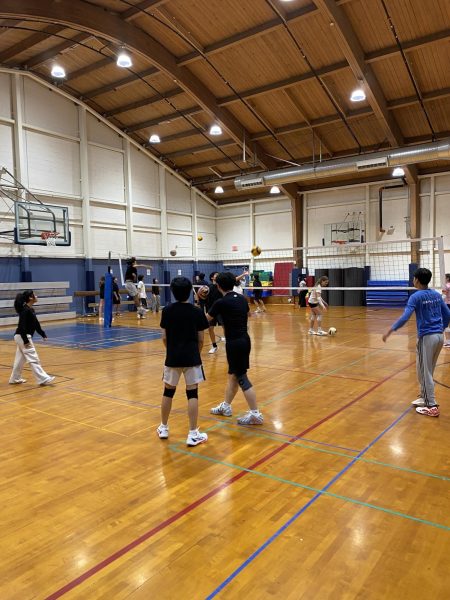
There are a few third-space resources for youth available in Portland. For example, Multnomah County Library and Portland Parks & Recreation both have programs specifically designed to create spaces for teens to gather and do different activities together. Some of these resources include open gyms, game rooms, a Dungeons and Dragons club, and spaces to create art. However, places for youth to hang out with more freedom and less structure — such as skate parks — are unfortunately less common or less used, despite being more frequently in need.
A lack of third spaces isn’t the only problem contributing to fewer youth getting out of the house; arguably, the larger issue is that many teenagers are simply less motivated to leave the house, whether or not there are spaces to be. A factor in this is the internet. Nowadays, you don’t have to look further than your back pocket in order to connect with people.
If you’re not feeding into your scrolling addiction, social media has also made it incredibly easy to talk to your friends at any moment, and it also means that you don’t even have to leave your house, let alone your room, to feel like you have hung out with them — video chatting or playing video games together are all modes of online socialization that often attract youth indoors rather than out. “Internet access and video game systems provide constant distractions but at the expense of personal connections,” says Dominick Dawson, recreation leader specialist at Portland Parks & Recreation. “To be in constant correspondence with friends and family around the clock allows for people to be social, but [this type of connection] seems shallow.”
While technology has created many great advancements and has made communication convenient, its rapid expansion has led to online connections becoming increasingly difficult to separate from real ones. When through-the-screen interactions are seen as just as meaningful as in-person ones, we can often inadvertently sacrifice the incredible connections we could create by spending more time with people off screens. “[Online] you can have the illusion of connection, but it really can’t replace the kind of connection you have from face-to-face interactions,” says Denise Castañon, editor of PDX Parent magazine. As a parent, she offers her personal perspective as to why youth are getting out of the house less, saying, “I think the pandemic exacerbated this tendency [of parents] to keep kids and teens home and safe, for myself included. Sending your kids out into the world by themselves is scary. But it’s also necessary to let kids go out, mess up a little bit, and learn from their mistakes. That’s how they become functioning adults.”
As Castañon says, going out in the world is a crucial part of developing social skills and gaining new life experiences, which cannot be replicated in a digital environment. Additionally, the prevalence of social media not only gives the illusion of a face-to-face connection but can also make it more difficult to seek and sustain true connections. “We see all of these things like a lack of compassion, a lack of empathy, a lack of understanding about people who are different from us,” says Leanne Loya, a program director at Natrona Collective Health Trust, a community health program in Wyoming that, in part, facilitates community engagement. “The internet has opened up this wide world, … but at the same time, keeps [kids] from connecting with what’s right outside their back doors.”
Whether teens are deterred from going outside due to a perceived lack of fun things to do, habits built during the pandemic, or the illusion that their phones or gaming consoles give them all they need, getting out of the house is still extremely important to one’s mental health and finding balance within their life. Social connection and belonging are natural human needs, and pursuing them often means exiting our homes and moving away from the internet.