


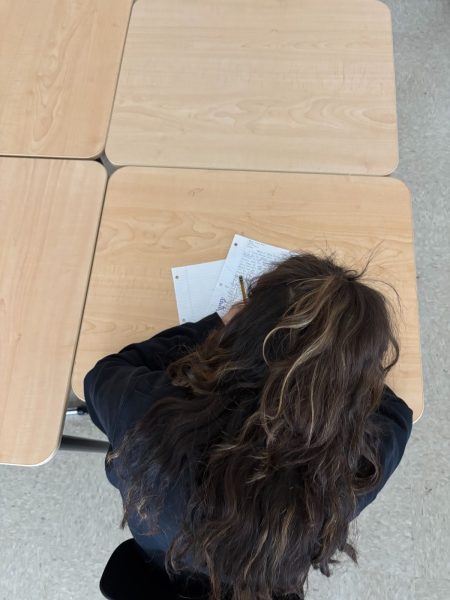
“I can confidently say I would not be graduating on time without accommodations,” says Thandiwe Venema, a senior at Oregon State University (OSU). These accommodations, provided by the OSU Disability Access Services office, were given to Venema after an official diagnosis of Attention Deficit Hyperactivity Disorder (ADHD), accompanied by a doctor’s note. Venema is one of a growing number of college students across the country that are receiving accommodations for a learning disability.
Recently, articles surrounding accommodations in higher education have flooded the news. Centering on the increase in number of students with accommodations for learning disabilities, these stories have garnered both attention and controversy. Accommodations can be life changing for students, though they often cause extra work for professors and have recently been challenged by many outside of academia, including the media.
The Americans with Disabilities Act (ADA), passed in 1990, prohibits discrimination against people with disabilities in all public spaces, including places of education and employment. It covers workplace accommodations, location accommodations — such as disabled parking, wheelchair ramps and accessible bathrooms — and communication accommodations such as Braille copies of written materials and sign language interpreters. Sabrina Wood, director of Special Education of Secondary Schools at Portland Public Schools (PPS), explains that in Oregon’s public high schools, student accommodations typically fall into one of two categories: 504 plans, which originate from Section 504 of the ADA; and Individualized Education Plans (IEPs), which come from the Individuals with Disabilities Education Act (IDEA). The language of 504 plans guarantees students “support or accommodations that help them to access their education,” such as extended time on tests, additional breaks, and preferential seating, Wood says. 504 plans are designed to provide students with accommodations that allow them to access general education. IEPs are typically more comprehensive, providing specialized instruction and services, and often track student progress. “I feel like I really have to advocate to use my accommodations, but once I advocate for myself, teachers remember,” says Elina Minato, a junior at Franklin who has an IEP.
The ADA has similar requirements regarding college campuses, requiring that students with disabilities have equal access to programming, academics, and housing. “We’re here to make sure you have equal access … to anything a ‘normal’ or ‘able bodied’ student would have access to,” says Dr. Jillian Heilman, director of student accessibility services at a small New England College. Venema says that the accommodations they receive in college now are “a lot more structured … [and] a lot more helpful,” than their 504 plan was in high school.
However, as more students get diagnosed with disabilities and receive accommodations, there has been pushback from some educators who believe students are being overdiagnosed. Dr. Patrick Edwards, who is a senior faculty member in the Department of Environmental Science and Management at Portland State University (PSU) and director of their Environmental Professional Program, believes that, “Some students use their accommodations because they aren’t prepared for an exam or haven’t engaged in the course.”
“Accommodation Nation,” an Atlantic article with the subheading, “America’s colleges have an extra-time-on-tests problem,” claims, “The increase is driven by more young people getting diagnosed with conditions such as ADHD, anxiety, and depression, and by universities making the process of getting accommodations easier.” Rose Horowitch, author of the article, declined to comment. While professors at PSU, OSU, Michigan State University (MSU) and Brown University agree that they have seen this increase, most of them say that the process of applying for, qualifying, and receiving accommodations is lengthy and often complicated, requiring an official diagnosis and doctor’s note. “The process to be registered formally isn’t super easy, and it takes a long time,” explains Dr. Kendra Cheruvelil, a professor and dean in Lyman Briggs College at Michigan State University. “The students that go through the process to get accommodations really need it.” Venema agrees with this, saying, “If somebody is working hard enough to get these ‘fake’ accommodations, they probably need them in the first place. Even if there’s not an official diagnosis, if somebody is working that hard, there’s definitely something that needs to be addressed.” Cheruvelil believes that the increased number of students with accommodations is a good thing, because “we want to make sure that every student can be successful.”
Although most professors interviewed believe there is not a pattern of students receiving accommodations who do not need them, the narrative driven by the media seems to take the opposite stance. In a Fox News article entitled “Experts rip college students as reports expose them for abusing system with fake disabilities,” Dr. Zachary Marschall, professor at University of Kentucky and editor-in-chief of Campus Reform, said that while reasonable accommodations are beneficial, he believes, “Being uncomfortable is not a disability and it is unreasonable to scheme for a single dorm room or easier testing conditions. This trend is symptomatic of Gen Z’s toxic entitlement to feel comfortable, which higher education enables by accommodating students’ self-centered expectations.” Nathan Kirk, an associate professor of teaching at OSU, disagrees, saying, “I don’t think there [are] a lot of folks out there that are really truly trying to game the system … [they] just want to have an equitable shot.”
At OSU, professors estimate the number of students with accommodations is between 5-10%, though Kirk says in his classes only about 5% of his students typically utilize them. Tala Navab-Daneshmand, an associate professor and associate head of graduate programs at OSU, says that in her classes, “All of the students that have [accommodations] use them.” Cheruvelil says that her department at MSU has “seen a big increase in the number of accommodations,” rising from about 2% of students with accommodations 10 years ago, to around 10% now. Dr. Sohini Ramachandran, Herman C. Bumpus professor of Biology and Data Science at Brown, says that in most of her classes, about 10% students have accommodations, though in some the rate is closer to 15%. She teaches both graduate and undergraduate students, and says that fewer graduate students have accommodations. “Accommodation Nation” reports that 20% of students at Brown are registered as having a disability.
At PSU, Edwards says that in some of his classes, 30-40% of students have a disability. This directly contradicts the claim made in “Accommodation Nation” that, “The change has occurred disproportionately at the most prestigious and expensive institutions.”
Regardless of the specific percentages, this rise, corroborated by disability offices across the country, is multifaceted. Firstly, professionals are getting better at diagnosing students. For example, autism diagnoses in girls have risen sharply in recent years. A study done by the peer-reviewed Journal of the American Medical Association found that autism diagnoses in girls ages 0-17 rose by 305% between 2011 and 2022. Wood explains that professionals used to “dramatically underdiagnose” and not “pay attention to how autism was showing up in girls.” She sees the rising rate of diagnosis as an improvement, saying, “It means that we actually understand a lot more about what it looks like, and are paying more attention to that.”
Stigmas surrounding learning disabilities have also reduced. Ramachandran says that students are more aware of the supports that exist, and conversations are more open. Cheruvelil agrees, saying better diagnoses, more legislative protection, and more social acceptance have all contributed. Increased awareness and acceptance of accommodations — and the conditions causing students to need them — may lead to an increased number of students accessing the provisions available to them.
“We want to be careful about the correlation between the development of our learning and understanding of disabilities, and our ability to identify that better,” cautions Wood. “It’s important that we not misunderstand that to mean that suddenly that means so many more people have disabilities.” Heilman says that in her 25 years of working in disability services, she has never seen students trying to fake accommodations. She believes, “Articles like ‘Accommodation Nation’ … took us several steps back, because [they] put more stigma back on disability.”
While there is less stigma than there was 15, 10 or even five years ago, it is still present. Now, some believe students are acquiring false diagnoses for common learning disabilities to receive the benefits of extra time and better housing. “I think people are scared about what people will think if they [say], ‘I have accommodations,’” says Minato.
Providing proper accommodations for students often requires additional work and effort from educators. While most professors agree that accommodating students with extended time is not terribly difficult, it can still cause problems. Professors often have difficulty finding rooms for students with testing accommodations to take their tests in, and have to be in two places at once when proctoring two rooms of tests. Edwards says that accommodating students “adds a lot of burden to running a course.”
Kirk says that accommodating students “absolutely” creates more work for him, though this is true anytime he changes aspects of his courses. He notes that while it is more work to do things such as making slides and lectures accessible, “It only needs to happen once, and then it’s good for everybody.” Navab-Daneshmand agrees that “accommodating for time isn’t really a problem.” However, more specific requirements surrounding the accessibility of class assignments, lecture notes, and Canvas content have been more difficult for her to implement.
“Faculty really want to help and they want to be supportive but they don’t always know how,” says Cheruvelil. “We would all benefit from there being more training … so faculty are better prepared.” Professors also cited effective disability offices as strong sources of support for staff. When disability offices are under-resourced, it makes it difficult for professors to accommodate students.
As teachers are often under pressure and navigating a heavy workload, they don’t always have the time or capacity to keep track of the accommodations each student needs. Different teachers approach this in different ways. For example, Navab-Daneshmand gives students a “flexibility request form” at the start of each semester, and grants additional accommodations to students that request them.
Teachers at Franklin face this difficulty as well, as they do not always have the resources to fully accommodate students. An anonymous teacher at Franklin explains that in many of her classes, the number of students with accommodations for seating at the front of the classroom is greater than the number of seats in the front. At Franklin and other PPS schools, in an effort to support inclusion of all students, students with needed accommodations are often clustered into the same classes where they can have access to additional teacher support.
“Accommodation Nation” states, “Research confirms what intuition suggests: Extra time can confer an advantage to students who don’t have a disability,” though it does not cite specific research to substantiate this claim. A study done by the National Institute of Health (NIH) analyzed the effects of extra time on reading comprehension in college students with and without learning disabilities and found that “normally achieving students did not perform significantly better with extra time.”
Edwards believes that having more students with accommodations negatively impacts those without, and lowers the overall rigor of his courses for all students. However, Cheruvelil disagrees with this, saying that students without accommodations are not negatively impacted and “these new ways of designing courses and assessing knowledge have been shown to be better for everyone.” Ramachandran agrees with this, saying that her students are “very flexible and appreciate … being given a space to demonstrate their knowledge without barriers [to their education].”
There is, however, the issue of equity regarding who is able to get an official diagnosis and subsequent accommodations. “Accommodation Nation” states that “accommodations have become another way for the most privileged students to press their advantage.” Heilman acknowledges there is a large “discrepancy within socioeconomic statuses,” as students with limited access to resources often do not get diagnosed early in their lives, which can be “critical to getting the support and services they need.” Wood adds that racial and cultural disparities in healthcare have also led to unequal access to diagnoses and services. “We know in Oregon [and] in our nation, our public education system has long not adequately educated marginalized groups,” says Wood.
While the accommodation system certainly has its share of controversy and problems, it also “evens the playing field,” providing students with disabilities equal access and opportunities that help them to be supported and successful in their education. As Ramachandran puts it, “There have always been people that benefit from support and the ability to demonstrate what they know, and giving them that opportunity in college is only a positive thing.”