


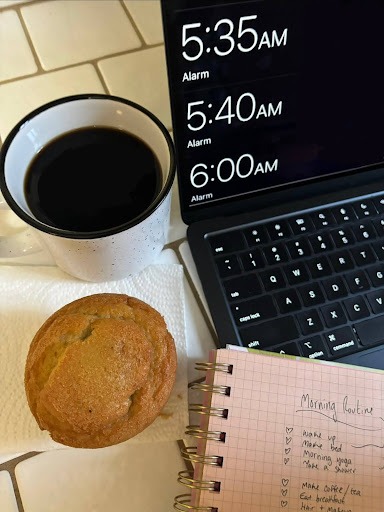
Many may assume there are only two types of people in the morning: those who rise early with the sun, and those who negotiate with their alarm clock as if it’s a hostage situation. Between those extremes lies a growing cultural fascination with morning routines. Elaborate checklists that include journaling, stretching, protein-packed breakfasts, cold showers, and gratitude practices all before 8 a.m., frequently appear on social media applications like TikTok and Instagram.
Routines are, at their core, patterns that reduce the number of decisions a person must make. Instead of waking up without direction, a routine provides structure: brush teeth, make coffee, get dressed, and begin the day.
That reduction in decision-making can matter. In the morning, the body experiences a natural increase in norepinephrine, a chemical that helps maintain alertness and focus. As production slows later in the day, mental energy may start to decline. Starting the day with simple, repeatable habits can help minimize the risk of decision fatigue, and help maintain willpower.
Lauren Dawson, a student teacher at Franklin, explains that structure is something she gradually developed. “I used to wake up at a time that caused me to be in a hurry. I was always rushing out the door,” she says. “I also used to stay in bed and go on my phone as soon as I woke up.” Over time, Dawson noticed that those rushed mornings left her drained and disorganized. Adjusting her routine by waking up earlier and avoiding her phone helped her feel more “peaceful and grounded,” she says.
Morning habits may also influence the tone of the day. Oversleep for 20 minutes and suddenly everything feels urgent: shoes are impossible to find, traffic lights are eternally red, and the day hasn’t even properly begun. If cortisol, commonly known as the stress hormone, is released, that heart racing, muscle aching feeling might not just disappear, shaping one’s mood for the following hours. Dawson notices this shift clearly when her routine is disrupted.
“Whenever there is a disruption, I feel like I get thrown off,” she says, “It’s hard to not go down the spiral thought process expecting everything to go wrong for the rest of the day.”
On the other hand, a steady start can create a sense of momentum. Completing small tasks can create feelings of accomplishment. When the brain registers that something has been completed, it releases dopamine, which can make the next task feel less daunting. Mornings with Dawson typically last about an hour and 15 minutes, and begin the same way each day. She notes, “I immediately make my bed. Then I brush my teeth, do my skincare routine, and stretch … for five to ten minutes.” That sense of discipline, Dawson explains, carries throughout the day. “I feel more productive because I gain my sense of devotion when I stick to my healthy habits,” she says.
Breakfast is another key variable. Some may skip breakfast and feel fine, but others notice a clear difference in energy and focus depending on when they eat. Paying attention to how different meals affect alertness can turn breakfast from an afterthought into a strategic choice. A morning meal that sustains energy may prevent a mid-day energy crash. Jessica Hussey, a senior at Franklin, describes a simple, consistent approach to breakfast: “I usually start by making a cup of green tea and then make my breakfast, which is typically a yogurt bowl.”
Phones also play a significant role in many morning routines. For many people, their first instinct is to check the notifications on their cell phones when they first wake up. That single swipe can pull the mind into emails, headlines, and messages, before feet meet the floor. Delaying that scroll, even briefly, can preserve a sense of quiet. Instead of reacting immediately to outside demands, the morning becomes a space for personal priorities.
Still, not all routines need to be rigid to be effective. In fact, flexibility may keep them sustainable. There will be mornings when alarms fail, schedules shift, or motivation is low, making it very important to adapt to your own needs for the day. Hussey echoes this idea, explaining, “I feel … more productive when I do my routine … but if I’m rushing to get everything done, then my day isn’t as productive as it should be.” Dawson is careful not to treat her routine as all-or-nothing, saying, “There are some mornings when I feel extremely unmotivated, however, I give myself grace.” Instead of abandoning the routine entirely, she adjusts it — stretching instead of full yoga, or choosing a quick but nutritious breakfast. “This way, I am not completely abandoning the task,” she explains.
That balance between structure and flexibility is where routines tend to thrive. For Hussey, this means keeping her morning simple. She notes that her morning routine “isn’t super intense” and only takes 30 to 40 minutes. The goal isn’t perfection, but consistency. The impact lies less in the complexity of the morning ritual and more in the reliability of it.
It’s important to remember that morning routines aren’t magic formulas. They don’t eliminate deadlines or difficult conversations. Instead, they offer a framework, creating a starting line rather than a scramble. The morning sets a tone, and sometimes, the difference between a chaotic day and a steady one simply begins with how you get up. Morning routines don’t have to look impressive to be meaningful; they can be quiet and ordinary. As Dawson puts it, “Completing small morning habits starts my day off with a sense of accomplishment and gratitude for myself.”