

Throughout the past few decades, climate change has continued to worsen, and its damaging effects have been felt in Oregon, as temperatures have increased 2.2℉ in the last century. The rising heat poses risks of natural events such as heat waves, drought conditions, and severe wildfires, according to the Oregon Department of Energy. To find local solutions to this global issue, the City of Portland created an advisory board with both adult and teen members: the Sustainability and Climate Commission.
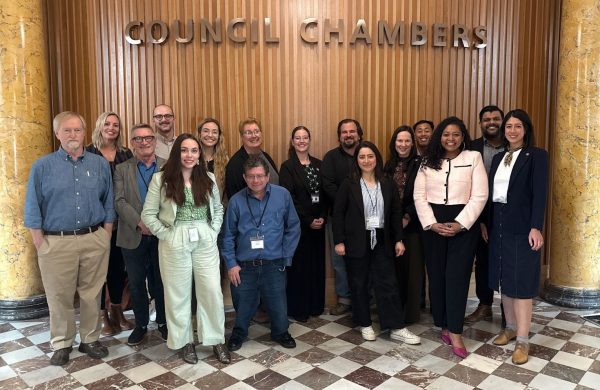
The Sustainability and Climate Commission held its first meeting in summer 2025. Initially, it was part of the larger Planning and Sustainability Commission, rather than a separate stand-alone commission. “The previous council did an evaluation of that commission and came to the realization that [it] had too large a body of work,” explained Elaine Livingstone, the Sustainability and Climate Commission coordinator.
The role of commissioners is to create and continually evaluate Portland’s Climate Action Plan. The commission is currently working to construct a new plan that will succeed the previous Climate Action Plan. “We’re undergoing a new planning process for the next Climate Action Plan,” said Livingstone. “This [plan] has an environmental justice priority and must outline specific outcomes for climate action.” The plan aims for Portland to reach net-zero carbon emissions by 2050 — meaning the emissions produced by human activity will be balanced by the amount removed from the atmosphere.
Recruitment for the council started in fall of 2024. The city received 245 applications submitted by community members throughout Portland, and 20 council commissioners were selected for the position. During this process, youth applicants were treated the same as the adults; applications were submitted through the City of Portland website, and leading candidates were then interviewed by a panel. Selection decisions were made by Mayor Keith Wilson and confirmed by the City Council in spring 2025.
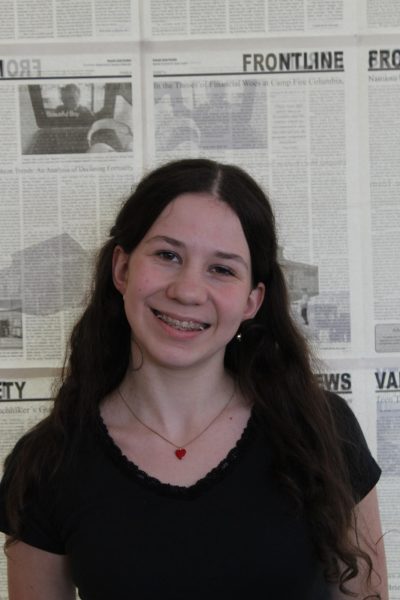
While the majority of commission members are adults, the commission offers select positions, including four youth council spots, to students in school. Eesa Taylor, a senior at Ida B. Wells High School and one of the co-chairs for the commission, applied for a position on the council through the City of Portland website in December 2024. Taylor’s interest in environmental sustainability started when he missed the student climate strike on Sept. 15, 2023, where students all over the state left their classes to speak out about climate issues. “It [was] that feeling of missing something important that inspired me to get more into climate justice,” explained Taylor.
Commission positions are also open to college students. Celeste Ruiz is a commissioner and student at Portland State University. After an industrial warehouse was built near her home in the Parkrose neighborhood, there was an influx of air pollution and an increase in rates of asthma in the community. “This spurred me into action to advocate for environmental injustice in racially marginalized communities,” Ruiz explained. She joined the council to pursue this goal.
“[W]e have designed opportunities for youth to be in full leadership positions,” said Livingstone. On the commission, students hold the same responsibility as the other adult commissioners, and even have the opportunity to run for higher leadership positions, just as Taylor ran for his co-chair position. While adult commissioners may serve up to four years, the youth positions are one year terms. “We designed it that way because we knew many of these [students] would be graduating high school, going on to college, graduating college, or entering a career, but they do have the opportunity to be reappointed for multiple years,” explained Livingstone.
The commission members meet monthly to create phases of the action plan, finalize bylaws, and address community concerns. Additionally, younger members plan and organize youth retreats, the first of which happened this February. “They went through the agenda approval process with the Chief Sustainability Officer, and one of the outcomes that will come out of that retreat are youth frameworks for the next Climate Action Plan,” said Livingstone.
The commission also focuses on the communities in Portland that are severely impacted by climate change. “We advocate for front-line communities like Black and indigenous people in communities of color, immigrants, refugees, low-income individuals, people living with disabilities, and those most at-risk and vulnerable to impacts of climate change,” explained Ruiz.
The commission’s youth positions offer many opportunities and experiences for student commissioners. “I [get to] connect with commissioners who come from a lot of different backgrounds, whether it be other [commissioners] for other districts, or city workers or just nonprofit owners in general,” Taylor explained. Including youth positions in the commission allows teens to gain leadership experiences and access a wide network, and ensures that a variety of voices help create Portland’s Climate Action Plan.
The commission’s future plans consist of creating short-term phases of the Climate Action Plan, and helping Portland work to reduce carbon emissions. The term for current student council members ends soon, and a new application period will be opening in late February. Students interested in applying must be 16 years old, and can find applications on the commission’s webpage. In a time of rising temperatures and impacts of climate change, student commissioners view student advocacy as increasingly urgent. “We’re running out of time,” said Taylor. “We’re going to run out of a lot of our resources by 2050 and I think we’re the last generation who has the ability to do something about it right now.”