

The earliest recorded human art dates back hundreds of thousands of years, and art has continued to be intertwined with human history. Some scientists and sociologists have even argued that art is what separates humanity from the rest of the animal kingdom. While researchers have found that some elephants are capable of being trained to paint, and artistic beauty can be found and appreciated in a bird’s nest or a beehive, these examples are all means of survival for the animals, fueled by instinct rather than inspiration.
Humans, however, have made beautiful art across time. Today, art can be found everywhere, from museums displaying early paintings and sculptures, to music on the radio or chalk on the sidewalk. This art is not always a matter of survival; rather, its purpose is to make something new for the world to admire.
With generative Artificial Intelligence (AI) rapidly developing and rising in popularity, there has been debate over the ethical use of generative AI and the creation of AI art. Some argue that generative AI can potentially make art more accessible. Ultimately, there are many aspects to consider when it comes to deciding how to engage with AI art, if at all. Should what AI generates from data of often unwilling human artists even be considered art? Where do we make room for this new entity?
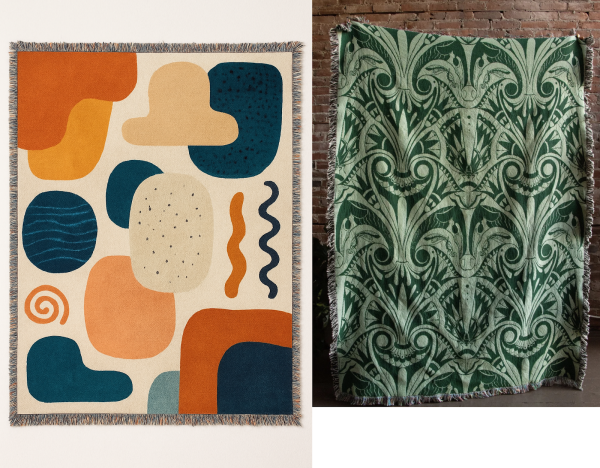
Many professional artists use their medium to express creativity and connect with the world around them. Melanie Nead, a Portland artist who founded Lonesome Pictopia, a wallpaper and textile business, said that for her, creating art is a “really fun intellectual challenge.” She continued, saying, “When I’m designing wallpaper using a pattern [in my workshop], I think it’s a really profound and interesting space to work in.” She explains that over “millennia, [we have found] all over the world, [in] widely separate cultures the same shapes [and patterns] over and over again, and it feels to me like there is something really deep about being human that you can find in decorative arts.” Art, at its simplest, is a way to express what it means to be human, so one is left to wonder what place AI has in this creative space. Maybe there will come a time when AI does know what it means to be human, or to be conscious, would its art improve then? In all honesty I find AI generated images to be creepy and lifeless, it falls into that uncanny valley zone for me, especially when it tries to replicate humans. As of now, I have never seen a piece of AI art that I have found as vulnerable or engaging as an organic piece.
According to ChatGPT itself, “AI can create art that people find meaningful, but the meaning comes from the viewer rather than the AI itself. AI doesn’t have personal experiences, emotions, or intentions, so it can’t create art about something it has lived through.” Personally, I thought this response was actually pretty insightful. Individuals are allowed to decide whether or not they choose to engage with AI art.
After I asked ChatGPT if it could make better art than humans, it said that “AI excels in precision, variety, and speed, so it can outperform humans in technique or visual polish. But humans bring personal experience, emotion, and intention — qualities that many people see as central to great art.” So if you can find your own deeper meaning within an artificially made piece of art and want to continue to consume artificially made expressions, great, you are entitled to do so!
Lettie Jane Rennekamp, a local artist and art teacher, when asked if they considered something generated by AI to be art, said, “I think so, yeah. I feel pretty open to [all kinds of] art. For me, as a viewer and a creator, art is about paying attention.” To give AI the benefit of the doubt — which I’ll admit is a little intimidating to me — is ultimately something artists should consider doing with caution. Factors such as the environmental impact of AI, or losing attention to detail within the usage of AI, are important things to take in mind. Although artists obviously have no obligation to incorporate AI, studying its art for meaning or personal value may serve you as an artist. In no way is creativity about being close minded. I think many artists would agree, so why draw the line with this new technology? Even if you hate AI, the old saying goes: “keep your friends close but keep your enemies closer.” It’s here to stay, and if we don’t learn from it or learn to work around it, we won’t get very far, especially if AI decides it’s better off without us, in which case, you’d better hope you liked its art.
AI is growing and advancing at a rapid pace, and it’s honestly pretty scary. While it can be intimidating, we have to view it as a tool and use it accordingly. But tools are something you use to create art, not something you pay to make art for you. We should be treading very lightly around this new form of intelligence, especially regarding our art, because our art is our expression, and if AI is expressing for you, what room does that leave for you to be human?